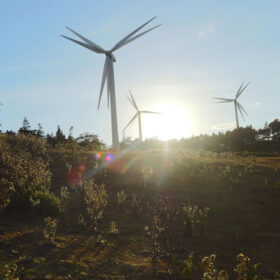
Research shows Germany’s investments in renewables are ‘paying back’
German researchers have found that the majority of subsidies required to reach the country’s renewable energy targets have already been paid, with an estimated 80% to 90% of subsidies for units in operation covered. The costs of newer renewable energy sources have decreased and are often competitive with remunerations from the wholesale market.
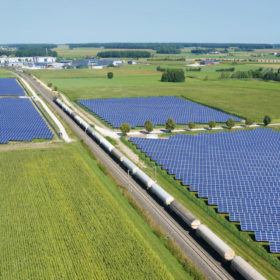
German government funding for renewable energy expected tor each €18 billion in 2025
The costs for renewable energy funding this year will be higher than forecast, due in part to the many hours with negative spot market prices on the electricity exchange. A new report expects the trend of high costs to continue until 2029.

German cabinet approves measure to expedite solar deployment
The German Federal Ministry for Economic Affairs has approved measures to streamline solar deployment, with a target of 215 GW of installed capacity by 2030.
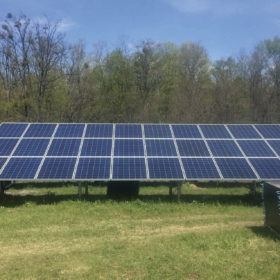
Weekend Read: Small change, big effect
Starting this year, ground-mounted solar modules in Germany can be replaced before the end of their service life, unlocking gigawatt-scale potential for new generation capacity without lengthy permitting processes or the need for new sites. Opinions differ as to what should happen with the decommissioned but still functioning modules, as pv magazine Deutschland’s Sandra Enkhardt reports.
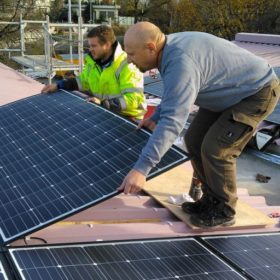
Germany installed 750 MW of solar in September
Germany’s Federal Network Agency (Bundesnetzagentur) says that 691 MW of new PV systems were subsidized under the country’s EEG renewables incentive program in September.
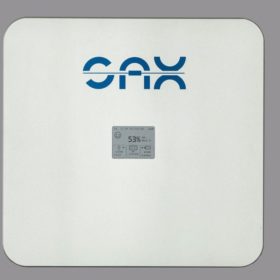
Germany will continue to dominate European home battery market – no matter who is in government
Industry association SolarPower Europe expects little change in the line-up of Europe’s biggest residential battery markets in four years’ time, with a rush of retrofits as turn-of-the-century solar feed-in tariffs begin to expire, set to keep Germany way ahead of the pack.
Germany introduces new renewable energy law
Under the new regulatory frameworks, the feed-in tariff scheme for rooftop PV will be maintained although only PV systems with a power output of up to 300 kW will be entitled to have the FIT at current levels. Installations ranging in size from 300-750 kW will receive only half of the payment. Owners of the latter scale of system, however, will be allowed to self-consume the generated energy.

World could add more than 900 GW of solar by 2025 if politicians grasp the nettle – IEA
With the International Energy Agency publishing its latest five-year clean energy forecast today, pv magazine takes a look at the solar content of the 162-page document.
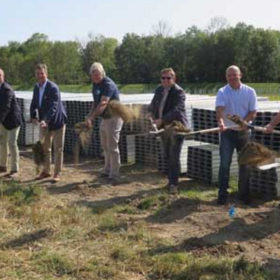
Subsidy-free, utility scale German solar farms could sell power on spot market
The unsubsidized market is taking another step forward in Germany with the news of two projects ready to sell power to the wholesale market as well as through PPAs.
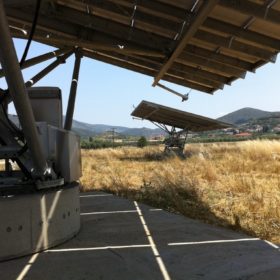
New low solar price in Greece but capacity falls short again as parliament passes €100m EV subsidy package
The price tariff agreed by German company ABO Wind for a 10 MW solar project in Igoumenitsa came in a tender which allocated only 142 MW of generation capacity, well short of the hoped-for 482 MW. It is hoped a slimline licensing process, to be applied in the next procurement round, will address the problem.
