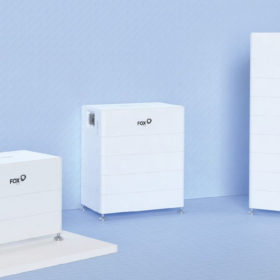
Weekend Read: Dawn of the store-age
Last year was another landmark 12 months for energy storage, with all indicators pointing to a massive surge in demand. Supply chain instability and inflation saw battery prices rise but the industry demonstrated an ability to swiftly react to geopolitical developments. We look at five trends driving the market.
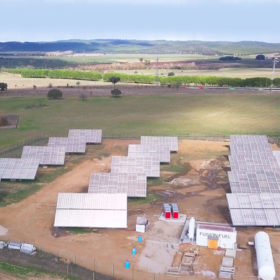
Portugal reveals first details of upcoming green hydrogen tender
The Portuguese authorities plan to award 10-year contracts to developers for 3,000 tons of green hydrogen and 10,000 tons of renewable methane.
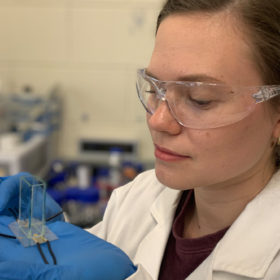
Australian researchers use sound waves to expand green hydrogen
Researchers from RMIT University and the University of Melbourne claim that high-frequency vibrations can release 14 times more hydrogen than standard electrolysis techniques. The discovery has ramifications for the expensive, rare materials currently used in electrolyzers.

Longi eyes green hydrogen market in India
Longi is entering the green hydrogen market in India with new alkaline electrolyzer offerings. It also plans to roll out a next-generation Hi-MO solar module later this year.
Spanish gas supplier sets up hydrogen production for heating, residential hot water
Madrileña Red de Gas and Pryconsa are developing a green hydrogen project that will meet the energy needs of 100 homes in Madrid.
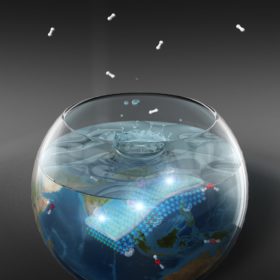
The Hydrogen Stream: Dye-sensitized photocatalyst promises most efficient solar water splitting to date
Japanese researchers have developed a new way to improve water splitting, while South Korea has completed its largest hydrogen production complex. Scotland and England have announced new hydrogen investments, and Uzbekistan and Saudi Arabia’s ACWA Power have agreed to collaborate on hydrogen projects.
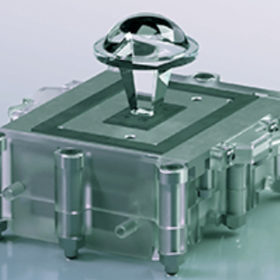
Green hydrogen project wins €10 million grant from Portuguese government
Fusion Fuel is set to receive a €10 million ($10.09 million) grant from the Portuguese government to develop a 6.6 MW green hydrogen project.
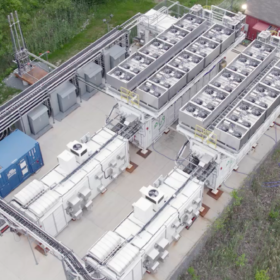
The Hydrogen Stream: Fuel cells for backup power
The PEM fuel cell test in New York demonstrated the viability of this technology at 3 MW, the first time at the scale of a backup generator at a data center. Meanwhile, a Spanish-Indian venture will develop up to 300 MW of installed green hydrogen production capacity in the Iberian Peninsula, and a Norwegian-German partnership aims to have a demo track powered by a fuel cell system on the road in mid-2023.
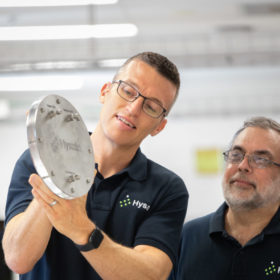
Hysata brings capillary-fed eletrolyzer tech closer to commercial production
Australian startup Hysata is seeking to commercialize a breakthrough made at the University of Wollongong which CEO Paul Barrett describes as a “brand new category of electrolyzer” with 95% system efficiency.
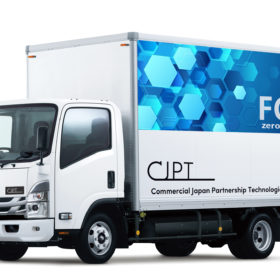
The Hydrogen Stream: Gas prices are higher than levelized cost of hydrogen for several technologies in Europe
In other news, Toyota unveiled plans to roll out light-duty hydrogen fuel-cell trucks for the Japanese market next year and the UK has launched a contract for difference scheme for large scale hydrogen projects. Furthermore, Japanese scientists have designed a ruthenium complex with a nitrogen-containing organic compound to improve high-temperature proton conduction in fuel cells.
