The case for aqueous zinc-ion batteries
Scientists in Germany have identified the main challenges that are preventing aqueous zinc-ion batteries (ZIBs) from becoming a mainstream storage technology for power grid applications. According to their analysis, the two main hurdles that must be overcome in future research are the increase of the specific energy of the full Zn-ion cell and the prevention of the parasitic hydrogen evolution reaction occurring during the Zn electrodeposition step.
Australian flow battery maker eyes largest install to date after inking US deal
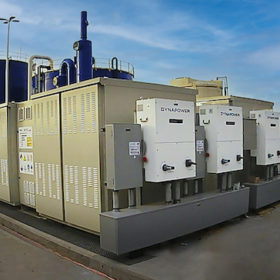
Australian redox flow battery manufacturer Redflow’s push into the United States market has received a major boost with the company announcing it will work with California-based biowaste technology firm Anaergia on the installation of a solar and 5.5-6MWh battery energy storage solution.

Mauritius launches tenders for 140MW of solar-plus-storage
Through two different procurement exercises, the archipelago’s Central Electricity Board seeks to reduce its dependence on fossil fuels.
Sweden’s first rock cavern for green hydrogen storage takes shape
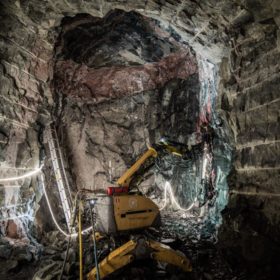
Vattenfall, SSAB and LKAB have reached the halfway point in the construction of a rock cavern storage facility in a coastal city in northern Sweden. The 100-cubic-meter facility is being constructed 30 meters below ground and will begin storing green hydrogen next year.
Monolithic fuel cell with power density of 5.6kW/L
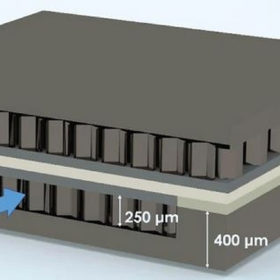
An international research group has developed a solid oxide fuel cell that may be used in vehicles. The monolith device has an active cell area of around 18 cm2 and was built through common manufacturing processes. It was found to achieve a high power density of 5.6 kW/L, which the scientists said is comparable with that of the best performing fuel cells based on ceramic anodes.
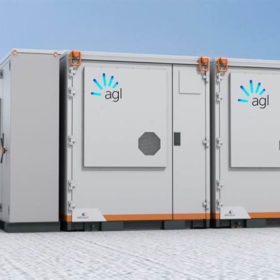
Australian utility gets tick of approval for 2GWh Liddell battery
Australia’s biggest power producer AGL has secured planning approval for a 500MW/2GWh grid-connected utility scale battery to be developed at the site of its coal-fired Liddell power plant in the New South Wales Hunter Valley.

The Hydrogen Stream: Hydrogen-powered trains for the German network
Elsewhere, the Danish government announced a plan to deploy up to 6 GW of electrolyzer capacity by 2030 and Germany and Norway agreed to conduct a feasibility study on large-scale hydrogen transport, including via pipeline.
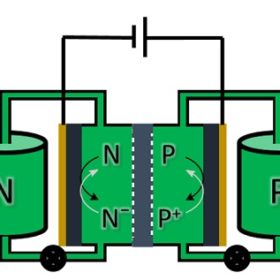
Symmetric redox flow battery based on Blatter radicals
A Dutch-Danish research group has provided a proof of concept for the use of Blatter radicals in electrochemical energy-storage applications. It tested these compounds in a small electrochemical cell that was found to remain stable over 275 charge/discharge cycles.
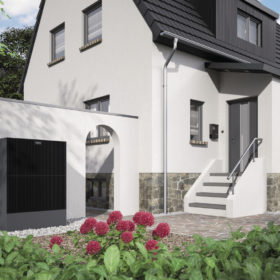
France lowers grid fee for solar up to 500 kW, heat pumps
According to the new provisions introduced by the French government, owners of PV systems with a capacity of up to 500 kW will pay a grid fee that is 40% of the current rate. As for heat pumps, their owners will pay only 20% of the fee.
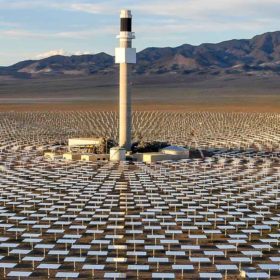
Concentrating solar power with heat storage could compete with batteries
For short-term storage in a 100% renewables grid, thermal energy storage located at concentrating solar power plants could compete with batteries, according to a new study using an idealized grid model. Seasonal storage needs could best be met with power-to-gas-to-power technology.
