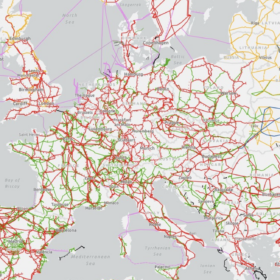
Europe to require grid-forming capability for new storage, renewables above 1 MW
The European Network of Transmission System Operators for Electricity (ENTSO-E) says new EU rules will make grid-forming functions mandatory for large-scale storage and renewable plants.
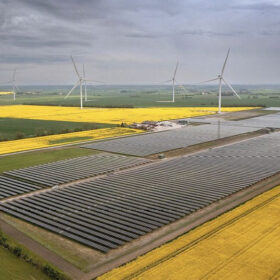
Attica-Crete leg of Mediterranean super grid due mid 2025
Greece has grand plans for an interconnector network that runs from the Middle East through to the heart of Europe. pv magazine examines the latest developments on the road to a Mediterranean super grid and what it might mean for the regions involved.
Fluid gas market situation casts shadow over EU energy system models
With each of the 10-year network development plans produced by Europe’s electricity transmission system operators years in the making, the latest such publication may already be out of date as the bloc prepares to fast forward its energy security and climate change ambitions.
Energy storage projects can apply for inclusion in Euro network plan
Electricity transmission system operators from 35 European countries have opened the call for new storage and long-distance network projects that wish to be included in their next, Europe-wide ten-year grid development plan.

Plans for 50,000 hydrogen-powered taxis in Paris
European electric transmission company body ENTSO-E has unveiled details of a project to install 11 GWh of electrolyzed hydrogen storage capacity across ten locations around the French capital by the end of the decade.
Entso-E targeted in recent cyberattack
The European Network of Transmission System Operators for Electricity said on Monday that unidentified hackers recently targeted its computer networks.
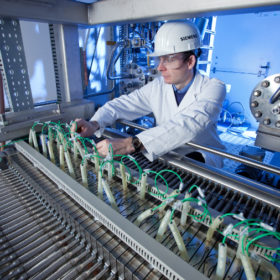
Integrated energy system could see 110 GW of electrolyzers in Germany and Netherlands
A report from Dutch grid operator TenneT and gas business Gasunie suggests the companies should jointly develop infrastructure after 2030. With hydrogen and synthetic methane in demand, electricity and gas will become increasingly inter-linked. Only seamless integration of the two networks would enable the EU to achieve its net-zero-carbon 2050 plan.
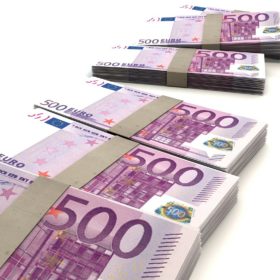
European coal fleet will run at a loss of €6.57bn this year
Economic thinktank Carbon Tracker used financial modeling to determine the profitability of every coal power plant in the EU. On average, 79% of the facilities run at a loss, with Germany, Spain and Czechia among the states particularly exposed to the consequences – for coal investors and the public.
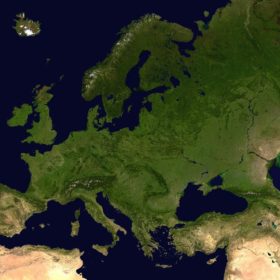
Renewable energy production beats fossil fuels in Europe for the first half 2019
UK based energy data service provider and consultancy EnAppSys released its quarterly review of the European energy market. While renewables have covered a large chunk of the continent’s demand, that trend will likely change in the second half of the year, as production from renewables falls. Meanwhile, coal generation is being pushed out of the U.K. market, although not fully to the benefit of renewables as gas-fired power plants are picking up momentum.
EU clean energy transition receives an €800 million boost
The funds will come from the Connecting Europe Facility. Around €504 million will be used for electricity infrastructure and smart grids and another €286 million will be devoted to gas. The remaining €9 million will be allocated to studies on the development of carbon dioxide transport infrastructure.
