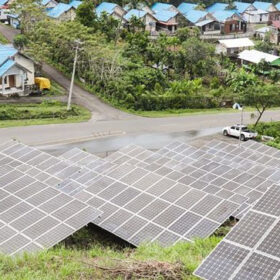
Indonesia’s race to net zero
Coal-dependent Indonesia has huge solar potential but progress toward a net zero economy has been sluggish, explain Daniel Kurniawan and Fabby Tumiwa from the Institute for Essential Services Reform (IESR), an Indonesian thinktank.
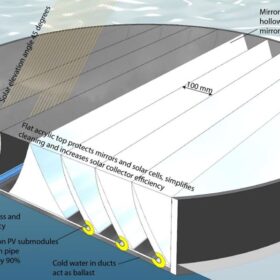
Floating concentrating photovoltaic thermal system for carbon capture
Two Norwegian companies are designing floating concentrating photovoltaic thermal technology that can produce both electricity and heat. It is intended for use in carbon capture projects and to be supported by an industrial heat pump system.

Weekend Read: Japan turns to the rooftop
Japanese policymakers are now looking at rooftop solar panels as land is scarce in the country and agrivoltaics, building-integrated PV (BIPV), and floating solar are still in their infancy, reports Mark Hutchins.

Scotland to deploy first floating PV array
Nova Innovation, a leader in tidal energy tech, says it will install Scotland’s first floating PV demonstrator later this year. The company currently has a multi-megawatt international pipeline under development.
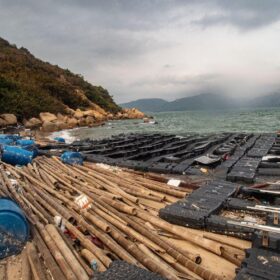
Floating PV system mysteriously washes up on Hong Kong beach
A local environmental organization has published pictures of the stranded array which appeared last week on two beaches. Hong Kong’s Agriculture, Fisheries and Conservation Department is currently investigating where the installation came from.
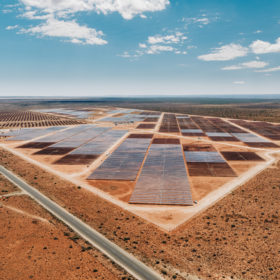
South Africa launches tender for floating, ground-mounted PV
The South African government is looking for independent power producers to build and operate floating or ground-mounted PV projects at selected government waterworks infrastructure or damns. The projects should be operational for 20 years.
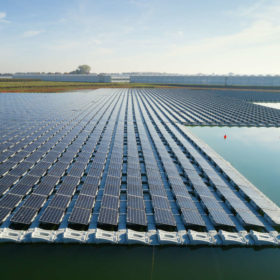
Temperature estimates for floating PV modules
Scientists from the United States and Brazil have developed four different ways to estimate the temperature of floating PV modules. They validated the models with temperature measurements from a floating solar plant in Brazil.
Global study highlights potential of floating solar
An international group of researchers has calculated the potential for floating solar across the world. The results show a generation potential of 9,434 TWh per year across 114,555 global reservoirs, with 30% of their area covered. The United States leads with 1,911 TWh per year of potential, followed by China at 1,107 TWh per year and Brazil at 865 TWh per year.
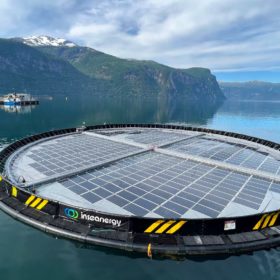
Ocean Sun and Inseanergy settle floating solar patent dispute
Floating solar specialists Ocean Sun and Inseanergy have been involved in a patent dispute over Ocean Sun’s floating solar structure since August 2022. The companies have now announced a settlement, with a “positive result” for both parties.
Weekend Read: Floating the solar dream
Indonesia is a coal-dependent country in which conventional power grids are problematic. The archipelagic nation is turning to floating PV (FPV) to help accelerate its energy transition. Sorta Caroline takes a look at the state of play for water-borne solar and the problems that still need to be overcome.
