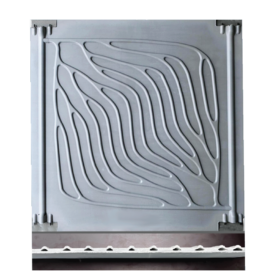
Fraunhofer ISE showcases solar thermal facades for heat pumps
Fraunhofer ISE has developed solar thermal facade panels that function as heat pump sources in buildings. The solution is made of ultra-high-performance concrete for aesthetic architectural facades.

German highway PV could generate up to 200 TWh a year
Surface limitations facing the expansion of photovoltaics in Germany have led to a bold vision: installing PV arrays along motorways and creating a vast DC smart grid in the process. The plan could even be implemented across Europe.
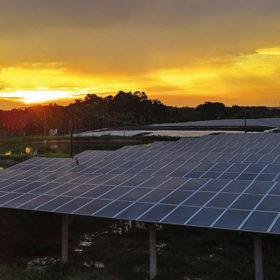
Weekend Read: Shingle all the way
While shingled cells have been around for a while, Tongwei’s adoption of the technology is notable as it is a manufacturer with considerable scale. If shingling can overcome some hurdles, it could prove a welcome solution as unshaded sites for PV become elusive in mature solar markets.
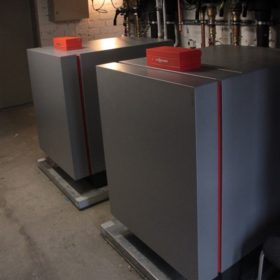
Fraunhofer ISE, Viessmann develop multi-source residential heat pump
Fraunhofer ISE has presented the results of retrofit heat pump installations in multi-family homes in Germany. One demonstrator featured rooftop solar PV and a multi-source heat pump developed in partnership with Viessmann. It uses air and geothermal as heat sources.
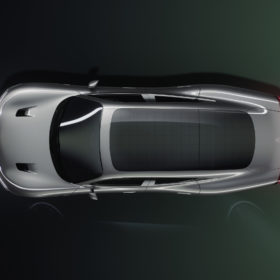
Efficiency of solar vehicles in real-world conditions
A new three-year pilot project will assess the efficiency of vehicle-integrated PV and verify it with on-the-road monitoring and testing. The goal is to predict the charging infrastructure needed for electric vehicles with PV modules.
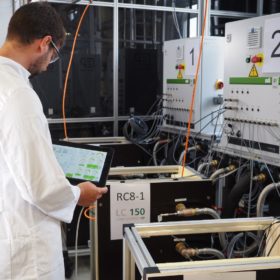
Fraunhofer ISE to develop propane heat pumps for residential homes
Germany’s Fraunhofer Institute for Solar Energy and a group of heat pump manufacturers have started a project to replace gas and oil heating systems in multi-family homes with propane heat pumps featuring low-charge propane (R290) as the refrigerant.
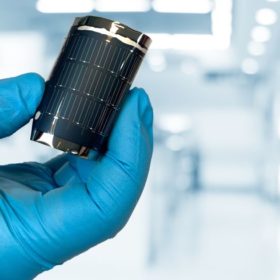
Swiss scientists achieve 22.2% efficiency for flexible CIGS solar cell
Scientists result have confirmed a 22.2% efficiency rating for a flexible CIGS solar cell with Germany’s Fraunhofer Institute for Solar Energy Systems.
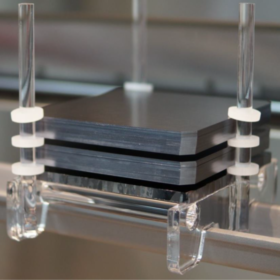
New production process could double wafer throughput to up to 20,000 per hour
Scientists from Germany’s Fraunhofer ISE – together with a consortium of plant manufacturers, metrology companies, and research institutions – have developed a new production line concept for high-efficiency silicon cells, with a throughput of 15,000 to 20,000 wafers per hour – roughly double the usual amount.
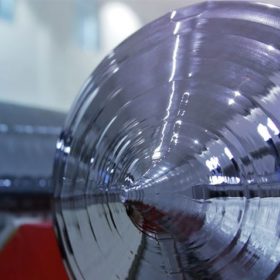
Gallium doping keeps p-type in the frame
Scientists at Germany’s Fraunhofer Institute for Solar Energy Systems (ISE) have investigated gallium-doping in p-type silicon wafers as a route to better performance. Testing these specially produced p-type wafers in TOPCon and heterojunction cell architectures, which several major PV cell manufacturers are gearing up to produce on more expensive n-type wafers, the scientists found that with gallium doping, the p-type wafers can achieve similar or even better cell efficiencies compared to those made so far with n-type wafers.
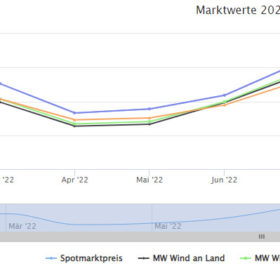
German solar market hits high of €0.261/kWh in July
PV system operators in Germany recorded high revenues in July, as solar generation continued to break record after record.
