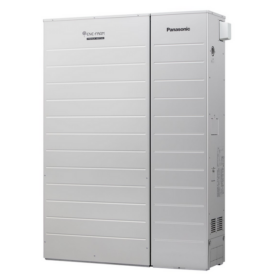
Panasonic debuts fuel cell cogeneration system for PV‑integrated homes
Panasonic has launched a new home fuel cell system for detached houses, designed to boost solar self-consumption through HEMS‑based smart scheduling. The unit generates electricity and heat from gas, supports demand response, and can supply emergency power during outages.

Floating PV could power up to 490,000 households in Hong Kong
Hong Kong has limited land, and researchers have checked how much of the city can be powered if most of its water reservoirs were to be fully or partially covered with floating PV systems. At best, full coverage can supply more than 15% of the city’s total demand, and more than 60% of the residential demand.
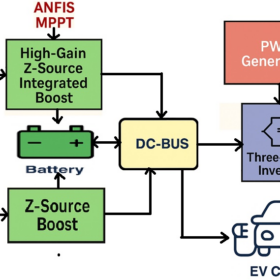
Novel MPPT technique for EV charging combined with PV, fuel cells
Scientists in India have designed a system that uses PV panels, a proton-exchange membrane fuel cell, battery storage, and a supercapacitor. It also relies on an adaptive neuro-fuzzy inference system-based MPPT that reportedly achieves an efficiency of 98.7%.
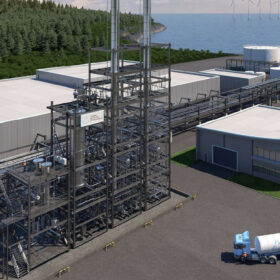
Will the green hydrogen dream take shape?
After a global flurry of green hydrogen announcements, fuel cell company insolvencies, and a sharp market reassessment, solar developers are questioning near-term green hydrogen demand. pv magazine’s Carrie Hampel takes a look at the international landscape.
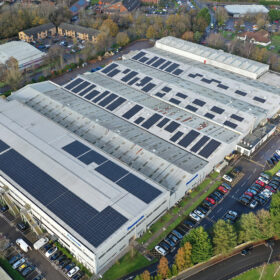
Panasonic powers UK factory with solar-driven hydrogen fuel cell generators
Panasonic has launched a solar-powered hydrogen fuel cell project at its factory in Cardiff, Wales, with the microwave assembly now operating on renewable energy.
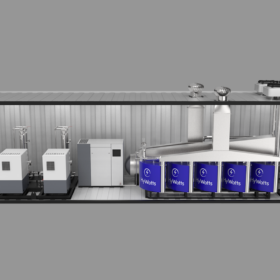
US startup offers reversible fuel cell for remote locations
HyWatts has developed the Powerplant-in-a-Box system, a reversible high temperature proton exchange membrane fuel cell that can also work as an electrolyzer, ensuring energy supply anywhere and anytime.
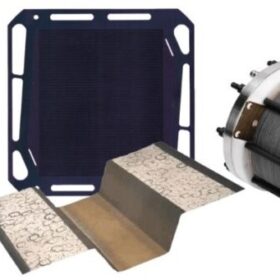
Novel fuel cell tech based on silicon-based bipolar plates
Australia’s Clean Energy Finance Corporation has backed a hydrogen fuel cell developer $7 million to support an innovative form of technology using silicon-based bipolar plates.
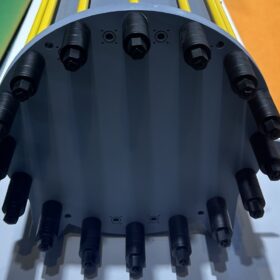
Offgrid PV-driven hydrogen vs. standalone solar-plus-storage
A German research team has compared the economic performance of an offgrid PV-electrolyser-fuel cell system with that of a standalone solar-plus-storage counterpart in a building in Niger. Its analysis showed that decentralized PV-driven hydrogen could achieve considerable lower levelized cost of energy and levelized cost of storage than the PV-battery system, with these values reaching €0.12 ($13.1)/kWh and €0.35/kWh, respectively.
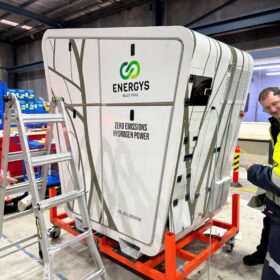
Remote telecom towers powered by 10 kW hydrogen generators
An Australian-made, 10 kW renewable hydrogen generator has been installed 120 km east of Melbourne, as part of a pilot project to provide backup to telecom towers disabled by outages.
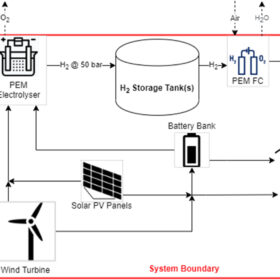
Hybrid hydrogen-battery system for off-grid PV-powered homes
Conceived by a Dutch research group, the proposed system is intended to store surplus renewable electricity via hydrogen generation and battery storage, with the latter being used only when hydrogen generation is not immediately available. Despite its high initial costs, the system can reportedly offer stable operation.
