
Germany could deploy 10 million heat pumps by 2030
Scientists have used open-source models to simulate heat pump rollout scenarios for the year 2030. Additional investments of around 54 GW to 57 GW of solar PV capacity in a least-cost solution would allow the installation of 10 million heat pumps by the end of the decade.

Overhead agrivoltaics could disrupt global navigation satellite systems used for precision agriculture
Fraunhofer ISE researchers have investigated whether PV panels installed above orchards can affect the reception of global navigation satellite system (GNSS) signals and, in turn, affect the precision of advanced autonomous tools. They found a disruption and suggested some alternatives.

Germany set to cross 100 GW milestone
Germany might exceed 100 GW of cumulative solar capacity in 2024, as new projections from Bundesverband der deutschen Energie- und Wasserwirtschaft (BDEW) estimate 17.5 GW in new PV installations.
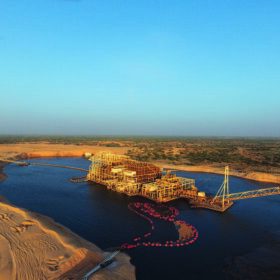
Juwi to build 20 MW/11 MWh solar-plus-storage project in Senegal
Juwi says it will construct a $33.2 million solar-plus-storage project in Senegal, integrating a 20 MW solar plant with 11 MWh of battery storage. The system will meet 20% of the energy needs of the Grande Côte mineral sands mine.
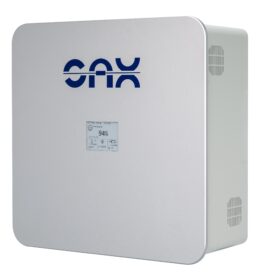
SAX Power releases 5.8 kWh residential AC battery
The German company said that its new storage solution also includes an integrated inverter function. It can be expanded to up to 17.3 kWh by connecting up to three modules.

UK regulator approves five undersea energy links by 2032
The UK electricity regulator has approved five new undersea energy links to connect the United Kingdom with the Netherlands, Belgium, Germany, Ireland, and between Northern Ireland and Scotland by 2032. Three will serve as traditional interconnectors, while two will also transmit power from offshore wind farms.

Controlling grid fluctuations via solar module cooling
A research group has proposed a novel method to control ramp rates in power networks. Its control optimization is based on weather, load and production forecast data. The scientists simulated the operation of the proposed technique and reached a ramp rate reduction of up to 76.2%.
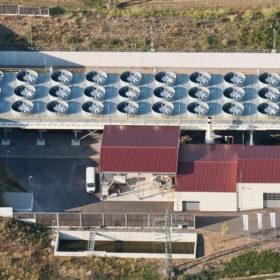
Fraunhofer ISE developing lithium extraction processes in Germany
The ThermIon project is intended to take into account the entire process chain from the pretreatment of the brine to lithium extraction and lithium carbonate or lithium hydroxide crystallization to the controlled return of the brine. The new process is intended to be both environmentally friendly and economical.
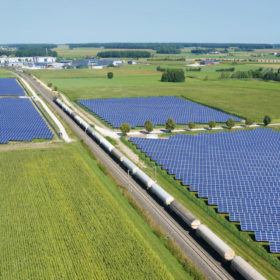
German government funding for renewable energy expected tor each €18 billion in 2025
The costs for renewable energy funding this year will be higher than forecast, due in part to the many hours with negative spot market prices on the electricity exchange. A new report expects the trend of high costs to continue until 2029.
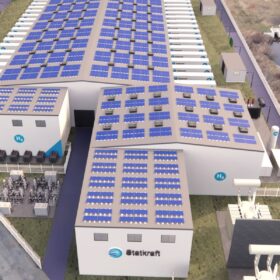
Statkraft aiming for up to €107 million in EU funding for hydrogen production in Germany
The Norwegian energy company wants to build 200 MW of electrolysis capacity in the German state of Lower Saxony. The waste heat generated is to be used for district heating. The EU has now asked Statkraft to enter into negotiations on funding.
