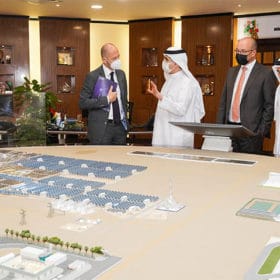
Dubai’s first green hydrogen project comes online
The project is the first solar-powered green hydrogen facility in the Middle East and North Africa (MENA) region.
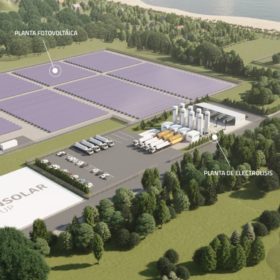
Solar-plus-storage to produce hydrogen from seawater
Spanish PV project developer Gransolar is planning to build a large-scale green hydrogen production plant in the Port of Almería, in southern Spain.
The Hydrogen Stream: Ørsted kicks off first project, ArcelorMittal moves towards blue hydrogen
A Greek consortium is also planning to invest €8 billion in the domestic production of hydrogen and the French city of Dijon is launching a €100 million euro green hydrogen project to reduce the CO2 emissions of the territory’s public transport starting in 2023.
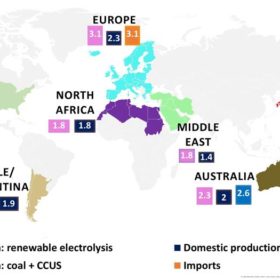
Geopolitical impact of long-distance transport of electricity and hydrogen
In an interview with pv magazine, Indra Overland, the head of the Center for Energy Research at the Norwegian Institute for International Affairs, explains how long-distance electricity and hydrogen transport differs from that of fossil fuels. He says strong Europe-North Africa connections could prove the viability of cables to connect continents, and notes that integration between countries and regions will increase.
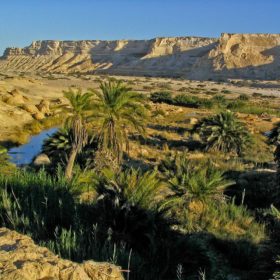
Giant wind-solar complex to produce hydrogen in Oman
An international consortium led by Omani oil company OQ is planning a 25 GW wind-solar complex to produce green hydrogen in the central region of the Middle Eastern country. The clean fuel could be consumed on-site, used to produce green ammonia, or exported to other markets.

Green hydrogen venture aims for $1.50/kg for Los Angeles by 2030
HyDeal LA includes the Los Angeles Department of Water and Power and aims to overcome green hydrogen’s high cost by launching a commercial hydrogen cluster at scale.
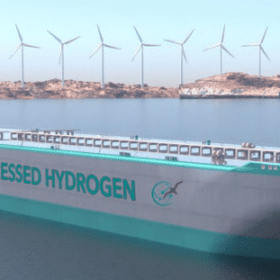
How will you know it’s green hydrogen?
Australia’s Smart Energy Council says that its new verification scheme for green hydrogen is gaining international traction.
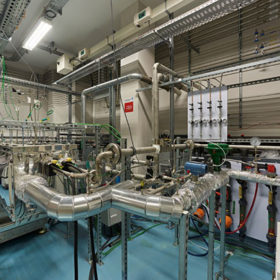
The Hydrogen Stream: US port wants to produce 9,000 MT with 260 MW/840 MWh of solar-plus-storage
Aurora Energy Research reports that the size of electrolyzers is increasing. Furthermore, Chile moves forward with its first green hydrogen project and German car manufacturer BMW said it would unveil a hydrogen fuel cell SUV in 2022.

Could hydrogen replace diesel in large-scale agriculture?
Australian farmer Thomas Blair is expanding the horizons of his industry to cultivate green hydrogen.
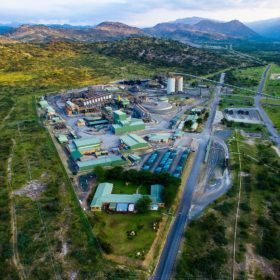
Green hydrogen supply chain concerns
With South Africa holding 63,000 of the world’s estimated 69,000 metric tons of platinum reserves – according to the Statista.com website – and Russia and Zimbabwe a further 5,100 between them, the European Commission has cited the metal as an example of a potential supply chain bottleneck that could handicap its grand plans for renewables-powered hydrogen production.
