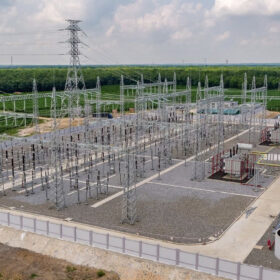
A tumultuous year for solar and batteries
In five key trends, pv magazine looks back over a year that saw PV module prices fall lower than many thought possible, while demand was restrained by grid congestion, among other challenges. Energy storage has had a strong year and geopolitics is seeing solar and battery manufacturing enter new regions as competition drives technical innovation.
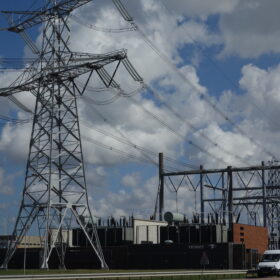
Dutch grid operators propose limitation contracts to free up 880 MW of capacity
Dutch grid operators TenneT, Enexis, Liander, and Stedin say that expanded use of “capacity limitation contracts” among renewable energy operators could free up about 880 MW of additional grid capacity. The contracts are granted by congestion service providers (CSPs), which act as intermediaries in the Netherlands.

Netherlands allocates €100 million for battery storage subsidies
The Dutch government has earmarked €100 million ($106.7 million) of subsidies for the deployment of battery storage alongside PV projects. The funds are part of a €416 million subsidy program announced last year to alleviate grid congestion.
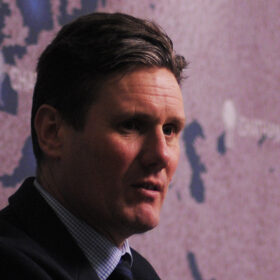
‘UK solar will forge ahead no matter who is in government’
With United Kingdom Prime Minister Rishi Sunak appearing to have decided green policy, or rather, anti-green policy should be used to rally voters to his party’s bid for re-election this year – and with the opposition Labour party vacillating over a promise to spend £28 billion ($35 billion) per year on green investment – Adam Swarbrick, of RWE Renewables UK, gives an update on the prospects for United Kingdom solar.

Bulgaria launches household solar rebate scheme
The Bulgarian Ministry of Energy has announced that a BGN 240 million ($134 million) rebate scheme is now open for applications from households seeking to install solar water heating systems and rooftop PV arrays, potentially coupled with battery energy storage systems.
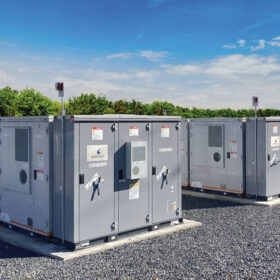
Weekend read: Pathfinders for grid stability
Non-synchronous renewable energy affects grid stability but storage-as-transmission (SAT) assets offer grid companies a trump card. Whether it’s “virtual transmission” in Australia, Germany’s “Grid Booster” program, or the giga-scale pipeline of projects emerging in the United Kingdom, energy storage is finding a way.
Grid congestion continues to increase in Netherlands
Solar project developers see fewer opportunities to build PV facilities in the northern Netherlands, as grid bottlenecks are becoming worse.
Netherlands changes grid code to reduce congestion, host more renewables
New rules in the Netherlands will allow new entities known as “congestion service providers” as intermediaries between grid operators and power plant operators, in order to make optimal use of the network.
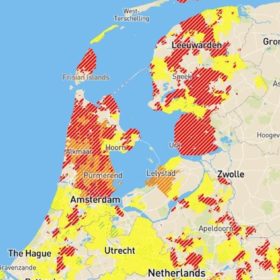
Netherlands updates grid congestion map
Netbeheer Nederland has provided a new map for grid congested areas warning that grid-connection issues may also arise in less problematic areas. Solar, in particular, is claimed to be responsible for increasing grid-constraints.
Solar job numbers kept on rising in 2020
The latest edition of a clean power jobs survey produced by IRENA and the International Labour Organization has stressed the important role which will need to be played by the public sector if the energy transition’s employment benefits are to be shared equally.
