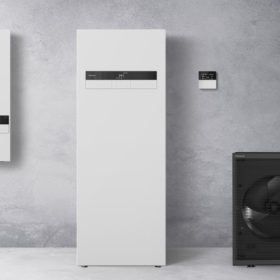
Panasonic brings air-to-water heat pumps to Europe
Panasonic’s new heat pump can supply domestic hot water, heating and cooling from a single, integrated unit. It can also synchronize with the Japanese company’s PV panels and its CZ-NS4P technology printed circuit board technology, while also ensuring smart-grid compatibility.
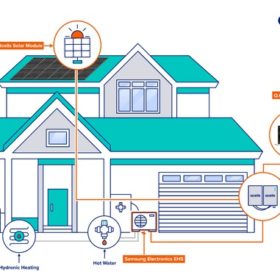
Hanwha Q Cells launches residential solar-storage-heat pump solution in Europe
Hanwha Q Cells has combined its solar panels and batteries with Samsung’s heat pumps. The offering includes an app that reportedly optimizes power consumption while maximizing solar power utilization.

Solar, geothermal heat pumps for heating, cooling demand in office buildings
Photovoltaic-thermal panels and geothermal heat pumps could mostly cover the heating and cooling demand of office buildings, according to new research from Greece.
IEA says global heat pump installations to hit 600 million by 2030
The International Energy Agency (IEA) says that the deployment of 600 million heat pumps by 2030 could cover 20% of the annual heating requirements of buildings throughout the world.
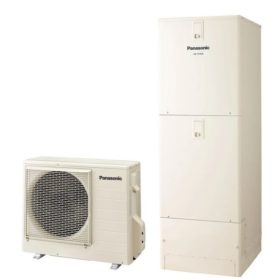
Panasonic to scale up heat pump output in Czechia
Panasonic has revealed plans to increase the annual production of heat pumps at its facility in Czechia to 500,000 units by March 2026.
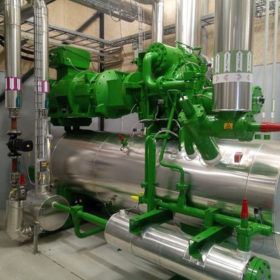
Ammonia heat pump for wastewater
Aalborg CSP will connect a 2.5 MW ammonia heat pump to a district heating system operated by E.ON Denmark. The facility will be located at a local wastewater treatment plant.
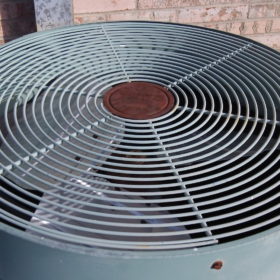
Impact of heat pumps on Ireland’s energy system
New research from Ireland shows that electrification could lead to more efficient utilization of renewable energy and the national transmission network.
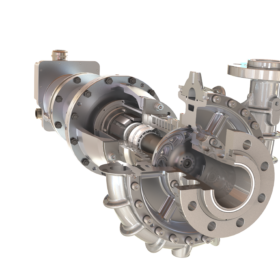
UK startup develops high-temperature heat pump that produces steam from waste heat
FutraHeat has designed a heat pump that can operate at reduced speeds without oil, recover waste heat from as low as 70 C, and deliver high-grade heat up to 150 C. The electrically powered heat pump utilizes waste heat from all sorts of industrial processes, including drying, distillation, and brewing.

Slovakia restarts rebate program for residential PV, heat pumps
The authorities in Slovakia are offering rebates to cover up to 50% of the cost of buying and installing solar water heaters, PV systems with generation capacities of up to 10 kW, heat pumps, biomass systems, and solar-thermal collectors.

Heat pumps ‘grossly underestimated’ technology for Australia’s decarbonization
Interest and investment in heat pumps have surged in Europe, but in Australia the technology has struggled to find a serious foothold. Despite the potential, dodgy technology suppliers and schemes gone awry have left a bad taste in Australia’s mouth, CEO Jarrod Leak tells pv magazine Australia
