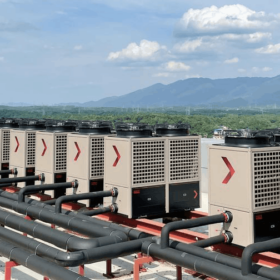
Phnix releases PV-ready heat pumps for commercial buildings
The Chinese manufacturer said the latest version of its Phnix HeatMaster heat pump series enables seamless integration with PV arrays. The systems have a coefficient of performance of up to 5 and can reach an outlet water temperature of 75 C.
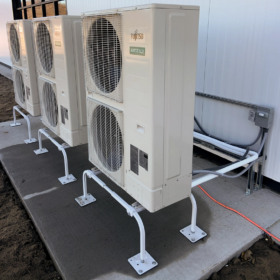
Best practices for PV-powered heat pump design
A British-Swedish research team has reviewed all models for designing and simulating solar-powered heat pumps systems of various complexities. Based on this work, the scientists proposed a new method combining five models across multiple computer programs into a single analysis tool that reportedly produces accurate critical metrics for technical, economic, and climate impact analysis.

Samsung launches monobloc air-to-water heat pumps
The Korean manufacturer said its new products are now available in the North American market and are suitable for multi-unit homes, apartments, new-builds and retrofits. The systems work with new AI technology and reportedly perform better when connected to a PV system.

Strong finish to record year for UK heat pump installations
November 2024 data from certification body MCS reveal record year for UK air-sourced heat pump installations. Two consecutive months with more than 5,000 certified installs puts 2024 on track for 50% growth on previous year.
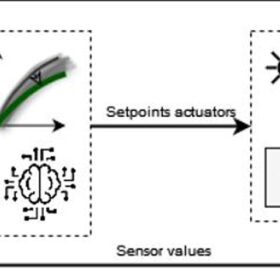
Fraunhofer ISE, EDF developing AI-based heat pump controller
The Fraunhofer Institute for Solar Energy Systems (Fraunhofer ISE) and EDF are leading an international consortium developing AI-driven heat pumps that adapt to environmental conditions and learn from changing circumstances.
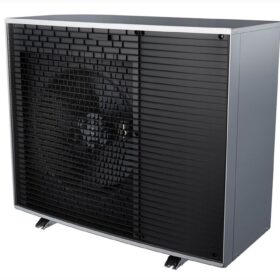
Daikin launches air-to-water heat pumps for single-family homes
Daikin has released a line of residential heat pumps, using propane (R290) as the refrigerant, with outdoor unit dimensions of 1,122 mm x 1,330 mm x 600 mm. The new products have an output ranging from 6 kW to 14 kW and can reportedly deliver hot water up to 75 C.

Germany could deploy 10 million heat pumps by 2030
Scientists have used open-source models to simulate heat pump rollout scenarios for the year 2030. Additional investments of around 54 GW to 57 GW of solar PV capacity in a least-cost solution would allow the installation of 10 million heat pumps by the end of the decade.
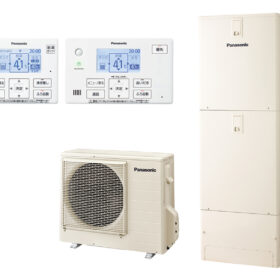
Panasonic offers residential heat pump solution that uses solar radiation forecasts
Panasonic has unveiled a new version of its Eco Cute CO2 heat pump that produces domestic hot water mostly during daytime based on solar radiation data. It integrates a dedicated app to obtain day-ahead solar forecasts and schedule water heating hours for the next day.
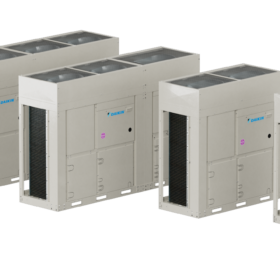
Daikin launches air-to-water inverter heat pumps for residential applications
The Japanese manufacturer said its new heat pumps have a temperature coefficient of up to 3.4 and a size ranging from 16 kW to 70 kW. The new solution is claimed to be particularly suitable for hospitals, hotels, and residential buildings.

UK government expands heat pump grant scheme
The UK government will make GBP 295 million ($308.4 million) in grant funding available to homes switching from gas boilers to heat pumps in the 2025-26 fiscal year. Meanwhile, forthcoming reforms will allow air-source heat pumps to be installed without the need to submit planning applications.
