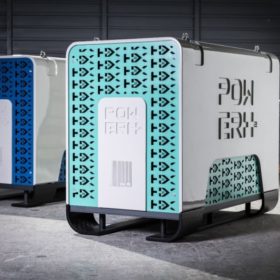
Australian startup releases new hydrogen generators
H2X Global has released the first of its hydrogen-powered generators in the Australian market.
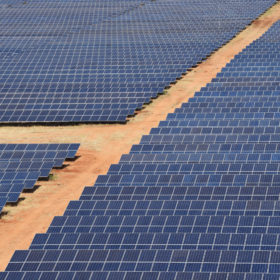
Avaada to invest $5 billion in green hydrogen, ammonia plant in India
Ravi Verma, senior executive vice president of Avaada, told pv magazine that the group will invest $5 billion in an integrated green hydrogen and ammonia plant with 6 GW of captive renewables capacity. The green ammonia facility will have a production capacity of 1 million tons per year.

Toyota, NREL partner to develop MW-scale fuel cell systems
The two will study the scaling and integration of fuel cell systems for stationary power generation.
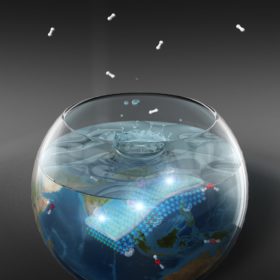
The Hydrogen Stream: Dye-sensitized photocatalyst promises most efficient solar water splitting to date
Japanese researchers have developed a new way to improve water splitting, while South Korea has completed its largest hydrogen production complex. Scotland and England have announced new hydrogen investments, and Uzbekistan and Saudi Arabia’s ACWA Power have agreed to collaborate on hydrogen projects.
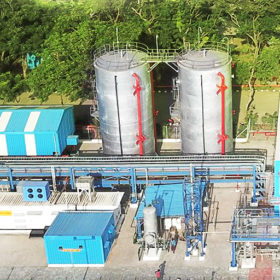
Larsen & Toubro builds green hydrogen plant in India
Larsen & Toubro, a Mumbai-based engineering group, has commissioned 380 kW of an 800 kW green hydrogen plant for self-consumption at its Hazira manufacturing complex in Gujarat, India.
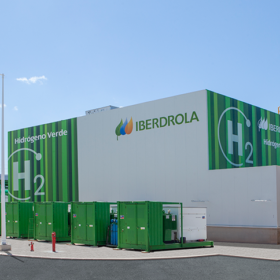
Iberdrola to invest €170 million in UK green hydrogen project
Iberdrola will develop a facility to supply green hydrogen to vehicles and machinery at the United Kingdom’s largest port, Felixstowe. The project is set start operations in 2026, with the capacity to produce 14,000 tons of green hydrogen in its first year, and the possibility to double this further down the line.
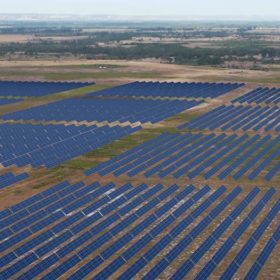
Australian solar park could generate hydrogen for less than $2/kg
A new study shows that hydrogen could be produced for as little as AUD 2.85 ($1.98) per kilogram, supporting Frontier Energy’s plans to make green hydrogen from a 500 MW solar project it is developing in Western Australia.
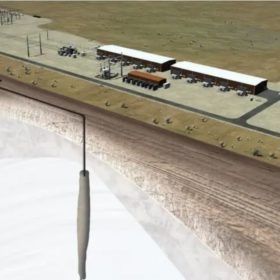
World’s largest underground hydrogen storage project
Mitsubishi Power Americas and Magnum Development are set to begin construction on a 300 GWh underground storage facility in the US state of Utah. It will consist of two caverns with capacities of 150 GWh, to store hydrogen generated by an adjacent 840 MW hydrogen-capable gas turbine combined cycle power plant.
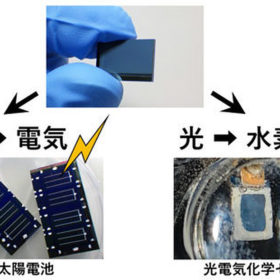
Chalcopyrite solar cell for tandem applications, photocatalytic water splitting
Japanese scientists have built a chalcopyrite PV device for tandem solar cells and water splitting for hydrogen generation. The device has a power conversion efficiency of 11.05%, an open-circuit voltage of 0.960 V, a short-circuit current density of 15.9 mA cm−2, and a fill factor of 72.4%.
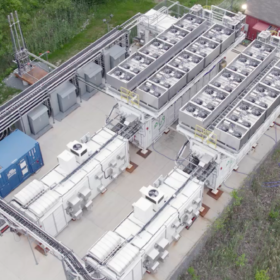
The Hydrogen Stream: Fuel cells for backup power
The PEM fuel cell test in New York demonstrated the viability of this technology at 3 MW, the first time at the scale of a backup generator at a data center. Meanwhile, a Spanish-Indian venture will develop up to 300 MW of installed green hydrogen production capacity in the Iberian Peninsula, and a Norwegian-German partnership aims to have a demo track powered by a fuel cell system on the road in mid-2023.
