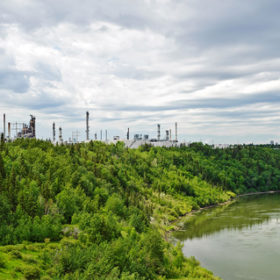
The Hydrogen Stream: new plans in the Nordics, China, Canada and Australia
H2 Energy Europe is building a power-to-gas project in Denmark and Everfuel wants to put hydrogen refueling stations in Sweden. Chinese energy giant Sinopec said it wants to invest massively in hydrogen and the Australian Energy Market Operator (AEMO) has said hydrogen will be the main driver for “very quick” growth in electricity demand.
Vanadium-manganese redox dual-flow battery to store power, generate hydrogen
Conceived by Swiss researchers, the battery shows good stability over 50 cycles, with an average energy efficiency of 68% and a water-splitting voltage efficiency of 64.1%. According to its creators, the device produces pure hydrogen that only needs to be dried and compressed for optimal storage.
Australian energy retailer, Japanese oil refiner team up on green hydrogen
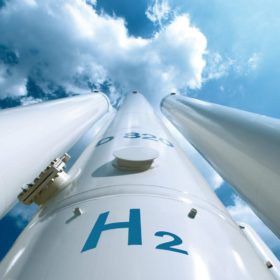
Origin Energy, Australia’s biggest energy retailer, has agreed to team with Japan’s largest oil refiner, Eneos, to explore the potential for a commercial-scale green hydrogen supply chain between their respective home markets.
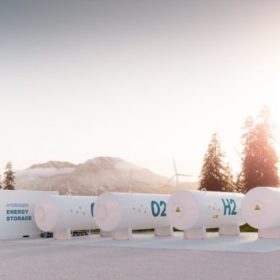
The Hydrogen Stream: 2 GW green hydrogen project in Chile, new push from South Korea
Furthermore, the Indian government is proposing to mandate using green hydrogen in fertilizer and refining and Japanese automotive manufacturer Toyota wants to assemble integrated dual fuel cell (FC) modules in the United States.

German researchers want to reduce manufacturing costs for electrolysers by more than 25%
A number of Fraunhofer institutes in Germany want to make green hydrogen more cost-competitive and are working to identify the best and most economical processes for the production of electrolyzers. They intend to build a digital library of future-proof electrolyser manufacturing processes with which the investment costs and even the return on investment can be determined in advance depending on the planned production volume.

Spanish consortium wants to simplify hydrogen production through photoelectrocatalysis
Spanish energy giants Repsol and Enagás are planning to build an electrolyzer based on photoelectrocatalysis at an industrial complex owned by the oil company in Puertollano in 2024. The device receives direct solar radiation and with a photoactive material it generates the electrical charges that cause the separation of the water molecule into hydrogen and oxygen.
Australian scientists set out to use wastewater for green hydrogen electrolysis
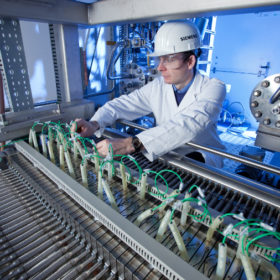
Australia has the sun, the wind and the space to become one of the world’s green hydrogen export superpowers in coming decades. However, the Sunburnt Country does have a dearth of one ingredient in the green hydrogen equation – freshwater. Thankfully, researchers from Monash University and a group of national water utilities are joining forces to find a way to use wastewater for the process of electrolysis.
Coupling PV-powered electrochemical water splitting with battery storage
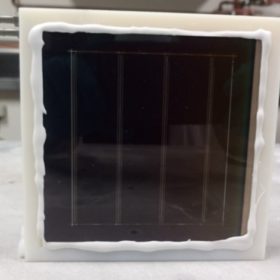
A German research team has developed a photovoltaic-electrochemical device for alkaline water electrolysis that can be linked to battery storage. The proposed system configuration can not only smoothen out the PV power fluctuations and facilitate power coupling, but also improve solar to hydrogen efficiency.
Indian solar developer to build 3.5 GW green hydrogen project in Oman
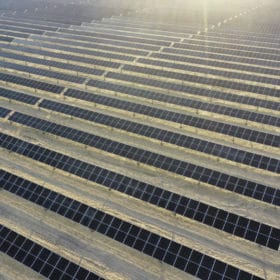
Acme Solar said the facility would use 3 GWp of solar and 0.5 GWp of wind energy to produce 2,400 tons of green ammonia daily and approximately 900,000 tons annually. Construction is planned in phases with an investment of $3.5 billion over the next three years.
The Hydrogen Stream: First vessel to operate on solar-powered methanol in Denmark, giant green hydrogen project in China
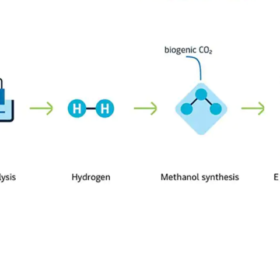
Energy storage and clean fuel company ITM Power also opened a 1 GW electrolyzer factory in the United Kingdom and South Korea’s automobile parts maker Hyundai Mobis is investing US$1.1 billion in two hydrogen fuel-cell plants in its home country.
