
Sweden’s Epishine expands indoor PV module manufacturing capacity
Epishine, an organic PV module manufacturer, has completed a new factory in Linköping, Sweden. The facility uses roll-to-roll equipment to produce new products for low-power battery replacement and the self-powered electronics market.

Technology brings universal access to clean energy within sight
The opportunities available from the aggregation and interpretation of mass data are huge and could help attract investors and ensure more efficient electricity networks as the world races to try and achieve the UN goal of access to reliable energy for all this decade.
SolarEdge to acquire energy analytics specialist Hark Systems
SolarEdge is set to fully acquire Hark Systems, a UK-based smart energy technology firm.

How low-light solar cells can decarbonize your home
With the latest generation of household devices increasingly connected and internet-of-things (IoT)-enabled, dye-sensitized solar cells can finally realize their latent promise and help reduce the carbon footprint of billions of manufactured goods.
New battery needs seconds of sunlight to keep wearables charged
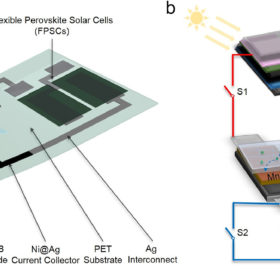
Researchers at Surrey’s Advanced Technology Institute have demonstrated a new, highly integrated, flexible photo-rechargeable system based on zinc-ion batteries and perovskite solar cells. It only needs a few seconds of sunlight to keep smart wearables charged.
The best PV tech for Internet-of-Things devices
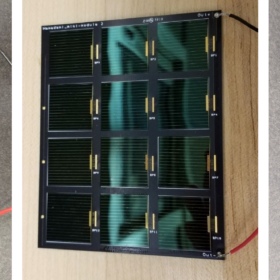
U.S. scientists have evaluated three different PV technologies – GaInP, GaAs, and silicon – for powering wireless temperature sensors. They found that the silicon solar module offers the lowest performance and also suggested its use may be applied to low-demand devices.
First Solar plans a 3.3 GW Indian module fab
The U.S.-based manufacturer is planning a vertically integrated thin-film solar module manufacturing facility in India. The factory will likely be built in Tamil Nadu and become operational in the second half of 2023.
Dutch grid company notifies further lengthy bottlenecks
The final 980 MW of transmission capacity in parts of the Friesland regional grid have been allocated to generation projects, and state-owned network business Tennet says bottlenecks could occur over the next seven years.
Tennet begins internet-of-things grid balancing project
Household heat pumps, EV chargers and rooftop solar panels will be able to earn their owners benefits in return for helping to balance grid networks struggling to accommodate new solar and wind power generation.
Solar challenges and trends and Covid-19 discussed at 2020 Africa Energy Forum
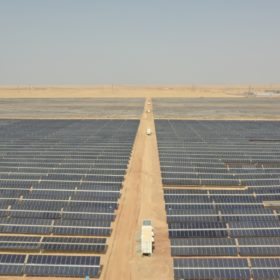
The 24-day, digital 2020 Africa Energy Forum kicked off on October 20. The event brings together African energy sector officials to identify opportunities, air their views, form partnerships, and take the necessary steps to improve the industry. For solar, challenges in policy making, procurement processes and the effects of the Covid-19 pandemic were discussed, as well as emerging trends such as solar digitalization.
