
Tigo Energy files patent lawsuit against SMA Solar in the US
The lawsuit is related to six alleged infringement claims regarding the US patents owned by Tigo Energy.
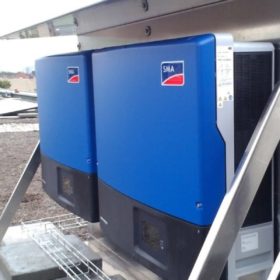
Study confirms rule of thumb that PV inverters should run without faults for around 15 years
A new study by Bern University of Applied Sciences shows that the performance of most PV inverters and power optimizers remains optimal for up to 15 years. The inverters considered came mainly from the manufacturers Fronius, Sputnik, and SMA and most of the power optimizers examined came from Solaredge.
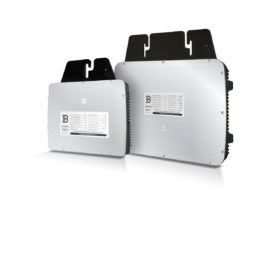
New micro-inverter series from China
Beny Electric unveiled a micro-inverter series with efficiency of up to 97.5% and a European efficiency of up to 97%. The micro-inverters are available in three different versions with a rated power output of 550 VA, 700 VA, and 2,800 VA, respectively.
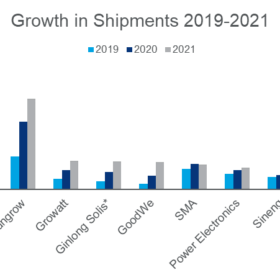
Huawei tops inverter supply rankings for 2021
China’s Huawei has been named the world’s biggest inverter supplier for the seventh year in a row, followed by Sungrow and Growatt, according to Wood Mackenzie.
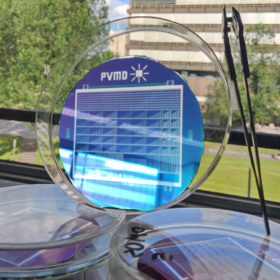
Solar cells integrating power electronics
Researchers in the Netherlands investigated the potential for integrating power electronics in solar cells in the form of diodes, transistors, capacitors, and inductors. They believe that this kind of PV cell may initially find applications in PV-powered Internet-of-Things (IoT) devices and later, as the economy of scale kicks in, in large-scale applications.

Chinese PV Industry Brief: Almaden secures glass order from Trina Solar
Almaden and Trina Solar have signed a long-term solar glass supply deal, while Growatt has revealed plans to list shares in Hong Kong. PV glassmaker Xinyi, meanwhile, has issued a gloomy profit outlook for the first half of 2022.
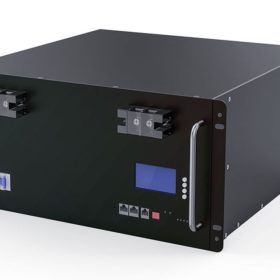
Indian manufacturer unveils battery with solar storage
India’s Natural Battery Technologies has developed lithium-based battery inverters that can be charged with solar power. The batteries are designed for residential and commercial use, with storage capacities typically ranging from 1.5 kWh to 20 kWh.
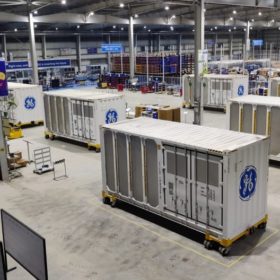
General Electric to triple solar, battery production capacity in India
The US multinational will expand the solar and battery energy storage manufacturing capacity at its factory in Tamil Nadu to 9 GW per annum by the end of 2022. The factory manufactures the FlexInverter power conversion solution and the FlexReservoir utility-scale energy storage systems.
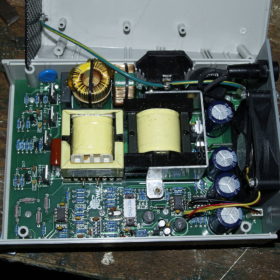
New model for grid-forming inverter operation
Scientists in the United States have developed a new model to allow utilities to use grid-forming inverters in order to better renewable energy intermittency. They described the inverter main circuit representation, the droop control, and the fault current limiting function.
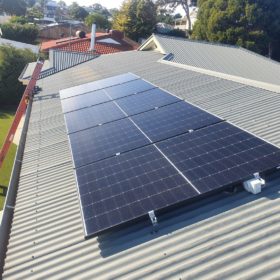
Enphase claims new safety regulations mean more Australian installers prefer its IQ Microinverters
Long-overdue safety and compliance regulation increases came into effect in May. US-based Enphase Energy claims its technology’s exemption from much of nation-wide regulations means installers across the country are opting for its products exclusively.
