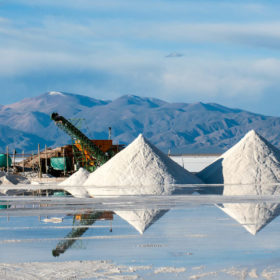
Battery metals: How quickly can supply ramp up?
A couple of weeks ago, Goldman Sachs sent shockwaves through battery metals markets, issuing a prediction that cobalt and lithium in particular were due for a sharp price decline in the next two years. But London-based Benchmark Mineral Intelligence is loudly pushing back, outlining its reasons why it believes the call on lithium was wrong. Meanwhile, US analyst Wood Mackenzie says that the battery raw material chain will remain tight, but notes that recycling could help to ease the supply deficit.
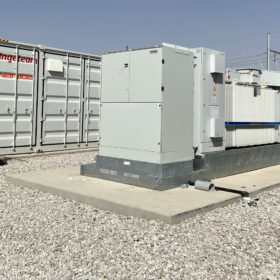
Ingeteam touts Italy’s largest storage system
Spain’s Ingeteam will supply a 70 MW/340 MWh facility based on almost 60 lithium-ion containers to provide storage services to the grid.
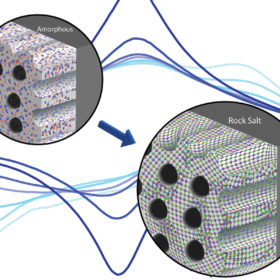
The mobility rEVolution: New lithium-ion battery material for faster charging times
In other news, Volkswagen’s electric vehicles are sold out in Europe and the US. for 2022, Porsche invests in silicon anode specialist, and Tesla is reportedly looking to expand its Berlin Gigafactory.
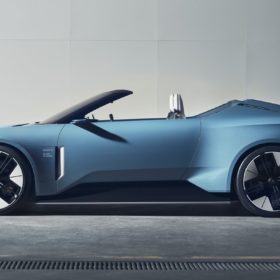
The mobility rEVolution: An electric car integrating an autonomous cinematic drone
Developed by Swedish manufacturer Polestar, the hard-top convertible incorporates a drone that can be launched from its dock behind the rear seats whilst driving to capture footage of the journey. In other news, Sony and Honda tie-up to make electric vehicles, Ford splits gas-powered and EV businesses, Stellantis unveils a strategic plan to reach net-zero by 2038, and Tesla offers free supercharging near Ukraine. Panasonic has also unveiled plans for two new production facilities for its large-format cylindrical battery cells.
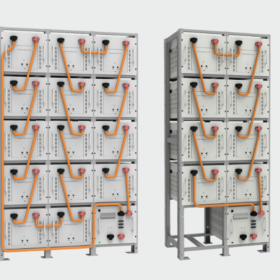
Atess unveils battery with active balancing technology
The Chinese manufacturer has upgraded its commercial application battery with a dissipative balancing technology that, it is claimed, will make the storage system suitable for different load conditions. Each battery module is sold with a capacity ranging from 100 to 200Ah and a storage capacity of 7.68kWh.
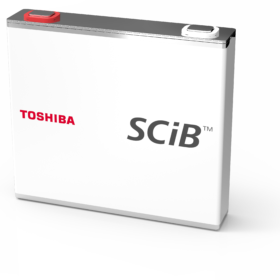
Toshiba launches 20Ah rechargeable lithium-ion battery
Toshiba has developed a battery that can be used with PV modules, with a design that charges and discharges at high currents. The new 20Ah-HP SCiB product has a rated capacity of 20Ah, a nominal voltage of 2.3V, and an input power of 1,900W. It measures 116 mm x 22 mm x 106 mm and weighs 545 grams.
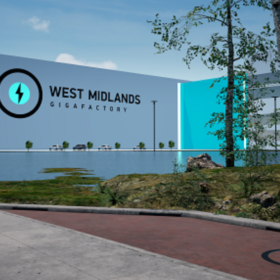
Solar-powered battery gigafactory gets tick of approval in UK
Local planning committees have given a go-ahead to a £2.5 billion gigafactory in the English West Midlands. The facility will be powered by 100% onsite solar and storage and equipped to both manufacture new batteries and recycle used ones.
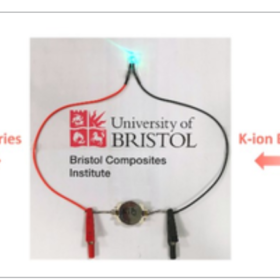
High-performance sodium and potassium ion batteries via new carbon electrode materials
Researchers in the UK have developed a novel controllable unidirectional ice-templating strategy to fabricate new carbon electrode materials which can boost the performances of sodium and potassium-ion batteries.
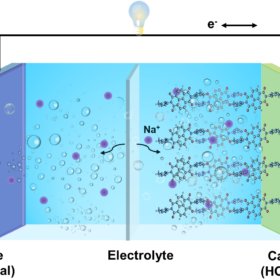
Ultra-stable sodium-ion storage via organic electrode materials
A research team at China’s Soochow University has used hydrogen-bonded organic frameworks to make sodium-ion batteries even more sustainable and affordable while prolonging their lifespan to over 10,000 cycles.

Fast charging for lithium-ion batteries needs a fix
Scientists in the United States placed fast charging for lithium-ion batteries under the microscope, finding that charging at higher rates can quickly damage the structure of a graphite anode, causing capacity loss even after a small number of cycles. By identifying the mechanisms causing this performance loss, the group can help point future research in the right direction.
