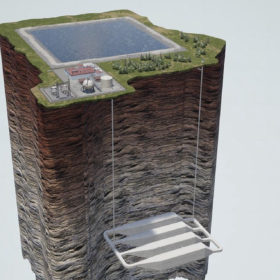
Weekend Read: A long time coming
Long-duration energy storage (LDES) is essential for decarbonizing the grid but gigawatt-hour scale systems continue to be tricky for companies with big ideas. Here are some of the latest innovations across a flourishing array of new – and old – ideas.
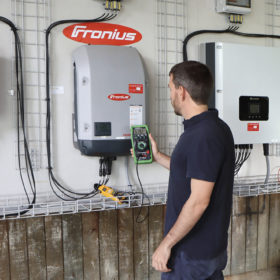
Weekend read: Elusive longevity
The expected lifetime of PV inverters is significantly shorter than that of modules. In many projects, inverter replacement is included in financial calculations from the start, despite the high costs. Research is being conducted into the causes of faults to develop more durable inverters and components. But plant design can already improve the lifespan of inverters in use today, reports pv magazine Germany’s Marian Willuhn.
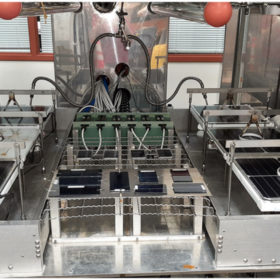
Putting bifacial modules to the test
US scientists recently put different bifacial solar cells and modules through a series of tests at elevated temperature, humidity, voltage and mechanical stress levels. The tests revealed a range of light-induced and potential-induced degradation mechanisms that modules will likely suffer in the field.
How to get to 100% emissions-free electricity
The National Renewable Energy Laboratory is exploring different paths to 100% emissions-free electricity in the United States.
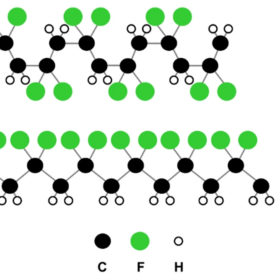
Putting polyvinylidene-fluoride backsheets to the test
US scientists tested PV modules built with backsheets and polyvinylidene-fluoride (PVDF) layers, to replicate the degradation the material has suffered in the field of accelerated testing. By exposing the modules to multiple stresses, they were able to cause degradation in the backsheet materials. Though this did not closely match what has been seen in the field, such testing can be useful in identifying potential weaknesses.
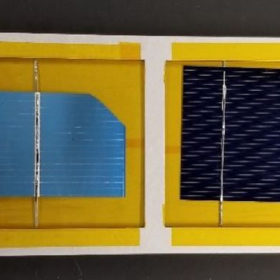
Role of UV in solar cell degradation
US scientists have tested a range of modern cell designs under strong ultraviolet light and have found that many of them, including p-type PERC and n-type heterojunction cells, are more susceptible to degradation than older back surface field designs. They noted that the rear side of bifacial cells may be particularly vulnerable.
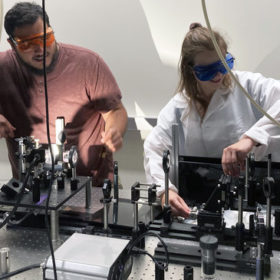
Self-healing perovskites can withstand fierce cosmic radiation
The development of a set of testing protocols for perovskite solar cells intended for use outside Earth’s atmosphere could lead to the devices being installed permanently, and even manufactured, on the moon.
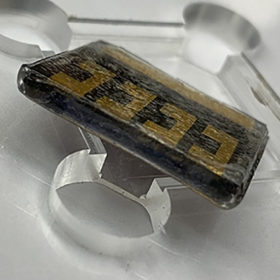
Lead absorbing encapsulant for perovskite solar cells
Scientists in the United States developed what they describe as a ‘scotch-tape like’ solution, which can absorb potential lead leakage from perovskite solar cells, preventing the toxic material from entering the environment. The tape, according to the scientists, can easily be integrated with existing encapsulation strategies, and was shown to absorb 99.9% of lead leaked from cells from that were severely damaged.
Perovskites get a $14m boost
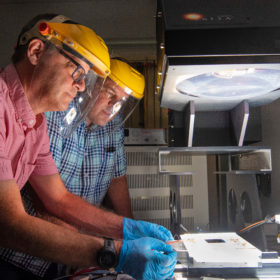
The United States Department of Energy is providing $14 million for a research center for perovskite solar technology. Led by Sandia National Laboratories, the center’s work will focus on establishing standard testing protocols as well as ensuring the long-term reliability of perovskite cells and the bankability of companies setting up to produce them.

Indonesian government has vastly underestimated solar potential
A Jakarta thinktank says the authorities need to significantly raise their clean energy ambitions as even the most conservative estimates of the volume of solar capacity the nation could host far outstrip the 207 GW the energy ministry has suggested.
