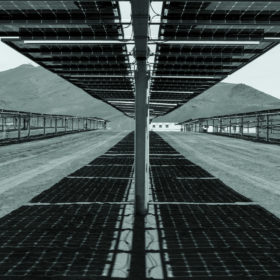
Soltec to launch world’s first bifacial tracking evaluation center
Spanish manufacturer of horizontal single-axis solar trackers Soltec, together with Black & Veatch and the Renewable Energy Test Center, have created a new evaluation center in Livermore, California. The inauguration will take place on July 9
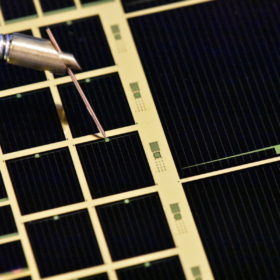
Microlink Devices hits 37.75% efficiency for triple junction cell
U.S. technology company Microlink Devices has achieved a record efficiency of 37.75% on its triple junction thin film cells. The lightweight cell achieves a power density of more than 3000 W/kg, and is designed for use in satellites and unmanned air vehicles (UAVs). The new efficiency record is confirmed by the National Renewable Energy Laboratory.
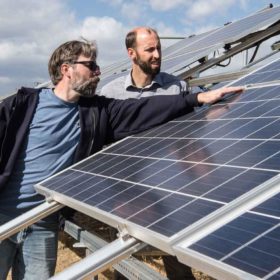
NREL develops open source tool to monitor PV plant performance & degradation
The U.S. National Renewable Energy Laboratory (NREL) has launched a new software package, developed alongside SunPower and kWh Analytics, which it says will improve the accuracy and reliability of PV plant performance data, and improve the industry’s understanding of degradation.
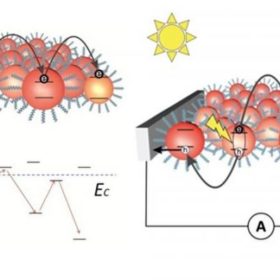
Russian scientists investigate quantum dot solids for PV applications
Researchers at the Moscow Engineering Physics Institute (MEPhI) have developed next-generation solids consisting of quantum dots (QD), or semiconductor crystals with a diameter of just few nanometers, that could deliver a big step towards cheaper and more efficient photovoltaic devices.

US: Trump proposes 72% cut to DOE’s clean energy research
U.S. President Donald J. Trump has asked Congress to take a machete to the Department of Energy’s (DOE’s) renewable energy and energy efficiency programs to even lower levels than he proposed last year – cuts likely avoided because of Congressional incompetence.
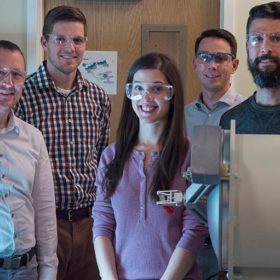
NREL hits new milestone in reducing perovskite degradation
Scientists from the U.S. National Renewable Energy Laboratory have a created a perovskite solar cell, which retained 94% of its initial efficiency after 1,000 hours of constant operation under ambient air conditions.
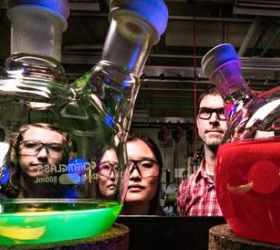
NREL scientists observe perovskite degradation at nano-scale
A team from the U.S. National Renewable Energy Laboratory (NREL) has developed a novel microscopic technique, which enables them to observe degradation in perovskite materials at the nano-scale, and pinpoint key areas for attention in their efforts to improve the stability and durability of the material.
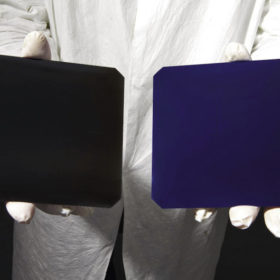
Suntech’s black silicon solar cells enter mass production
Wuxi Suntech Power Co., Ltd has announced its high efficiency black silicon solar cells have successfully entered mass production. It is targeting an annual capacity of 500 MW by Q1 2018.

Solar-powered smart window technology takes a big leap forward
Scientists at the U.S. Department of Energy’s National Renewable Energy Laboratory (NREL) have presented a thermochromic solar window with a conversion efficiency of 11.3%. Meanwhile, performing experiments on dye-sensitized solar cells, Cambridge scientists have determined the molecular structure of working solar cell electrodes within a fully assembled device that works like a window.
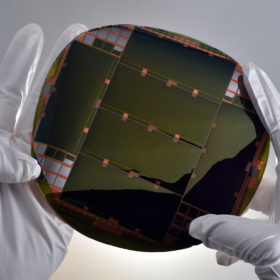
Microlink Devices signs deal with NREL to produce lightweight HJT cells
U.S. based semiconductor manufacturer Microlink Devices has signed an exclusive deal with the U.S. National Renewable Energy Laboratory (NREL) to commercialize a type of lightweight heterojunction solar cell architecture, which could be utilized in powering satellites and aircraft.
