
Dyenamo expands materials offer for perovskite-silicon tandem solar cells
In response to its customers’ needs, Sweden’s Dyenamo has added several new perovskite product lines and increased production of materials for the full range of perovskite solar cell designs.

Italian startup offers roll-to-roll process for organic solar panels
Ribes Tech, a spinoff of the Italian Institute of Technology, has established a roll-to-roll process to produce organic photovoltaic modules that it says can be expanded to enable volume production of PV modules for indoor sensors, trackers, and electronic devices.

TechBlick’s event shows roadmaps for perovskite, organic PV
A recent industry event about organic, perovskite, and other emerging cell technologies hosted by TechBlick revealed advances in power conversion efficiencies, stability, availability of materials, and specialized manufacturing equipment. The event also showed that the number of startup companies, new products and new pilot lines is increasing at a fast pace.
Vitamin C treatment improves stability of inverted organic solar cells
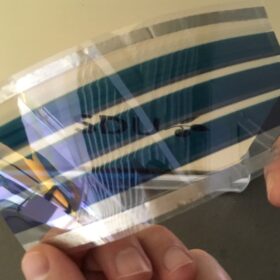
Danish researchers report that treating non-fullerene acceptor-based organic solar cells with vitamin C provides an antioxidant activity that alleviates the degradative processes arising from heat, light, and oxygen exposure. The cell achieved a power conversion efficiency of 9.97 %, an open-circuit voltage of 0.69 V, a short-circuit current density of 21.57 mA/cm2, and a fill factor of 66%.
MXenes-based organic solar cells offer greater stability, claim scientists
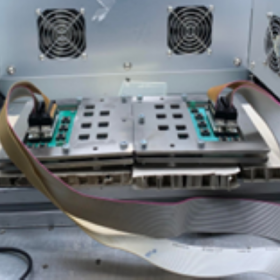
An international research team claims to have achieved greater stability in organic solar cells made with an electron transport layer doped with two-dimensional titanium carbide (Ti3C2Tx) – also known as “2D MXenes.” They used green solvents and an MXenes material known as titanium carbide (Ti3C2Tx).

Hering Group moves into organic PV film manufacturing
Hering Group, a centuries-old German construction and engineering company, says it has acquired the PV manufacturing facilities of organic solar film developer Asca, based in Kitzingen, Germany. The previous owners of the facilities describe Asca as a “largely loss-making” venture lacking in sales.
Epishine unveils organic PV kit for indoor battery-free applications
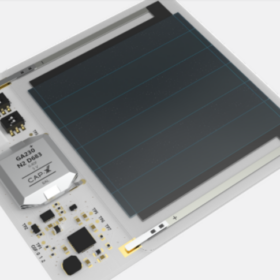
Sweden-based Epishine has launched a developer kit based on its 6-cell 50 mm x 50 mm organic PV module for prototyping and testing its use in battery-free indoor sensing and monitoring devices.

Dracula Technologies builds organic PV module factory in France
Dracula Technologies has built an organic photovoltaic (OPV) module factory in France to make OPV devices with digital printing technology for connected objects. The facility can produce up to 150 million cm² of OPV modules per year, with the first shipments scheduled to start in 2024.
New world record for large-area organic PV module efficiency
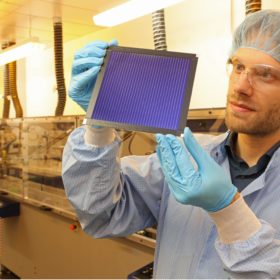
Scientists in Germany have achieved 12.6% efficiency with a 26 sq cm organic panel and 11.7% for a 204 sq cm device. The feats were achieved with a new module layout and a slower, high-resolution, short-pulse laser structuring process.
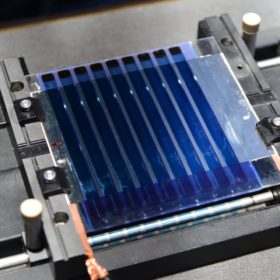
More efficient large-area organic solar cells with spin coating
Researchers in South Korea have used the process to increase performance and the replicability of large-area organic cells. The method was used during film formation to speed up solvent evaporation.
