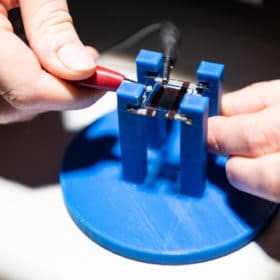
Inverted perovskite solar cell with transition metal carbides achieves 19.2% efficiency
A Russian-Italian research group has developed a two-dimensional transition metal carbide, known as MXenes, to collect photocurrent in perovskite cells. The cells were built with an inverted configuration and are based on a nickel(II) oxide hole transporting layer. The scientists claim that the doping technique allowed them to increase the efficiency of the cell by more than 2%.
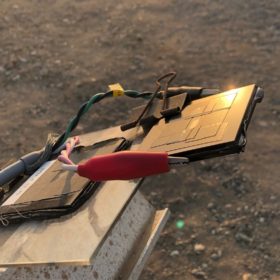
Bifacial perovskite-silicon tandem cell with 25.2% efficiency
International researchers have developed a silicon heterojunction PV cell with textured surfaces to accommodate the perovskite top cell. They optimized the rear transparent electrode to collect as much albedo as possible and achieved five different perovskite bandgaps by altering the iodide-to-bromide ratio in the perovskites, resulting in a higher open-circuit voltage.
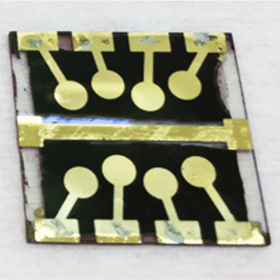
Water-splitting tech to reduce moisture in perovskite solar cells
Italian researchers have engineered a hole extraction layer with water-splitting additives to reduce the impact of moisture in perovskite PV devices. They claim that the method ensured a power conversion efficiency of more than 9% in perovskite cells stored for a month in a water-saturated atmosphere.

Stanford scientists gain insight on polaron distortion in perovskite solar cells
Polaron formation in perovskite solar cells has been indicated in scientific research as a possible factor for making this kind of cell particularly efficient, although the mechanism behind polarons’ action is completely unknown. A U.S. research group has now observed how polaron distortions form and grow.

Perovskite solar cell based on metal-organic framework with 22.02% efficiency
Scientists in Hong Kong have developed a cell they say retains more than 90% of its initial efficiency under accelerated testing conditions. The device is based on two-dimensional metal-organic frameworks.
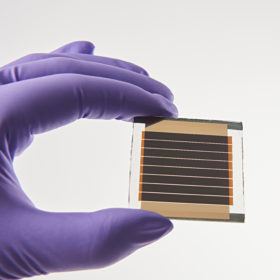
Research institute claims 20.3% efficiency for mini perovskite module
France’s Liten organization said it raised efficiency more than 20% with improved thickness homogeneity of the perovskite and optimized composition of the n-type interfacial layer. The previous record of 16.9% was attained by the same research group early last year.
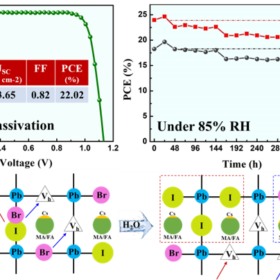
Moisture-resistant perovskite cell with 22.02% efficiency
Scientists in China have used a fluorine-containing Lewis acid treatment to develop a perovskite cell that is said to retain between 63% and 80% of its initial efficiency after 14 days under 75% and 85% relative humidity.

Panasonic claims 16.09% efficiency for lightweight perovskite solar module
The device has an area of 802cm² and thickness of 2mm. The manufacturer claims it improved module performance through an inkjet coating method and a reduction in weight by using thin glass substrates.
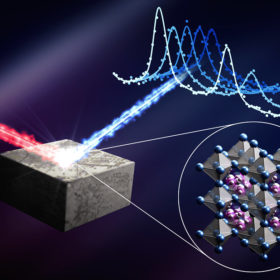
New configuration gives perovskite cells 18% efficiency
Cesium lead black perovskites could be interesting for solar cell development if their crystals are observed in their less efficient but more stable beta phase. The efficiency shortfall can be solved by healing emerging cracks in the surface of the cell using a choline iodide solution, according to an international team of scientists.
