
Pushing perovskite solar cells to the ultimate thickness limit
Researchers in Singapore have developed fully vacuum-processed ultrathin perovskite solar cells with absorber layers as thin as 10 nm, achieving high transparency and stable efficiencies up to 12%. These cells balance optical transparency and electrical performance, offering scalable, design-flexible photovoltaics suitable for seamless integration into buildings.
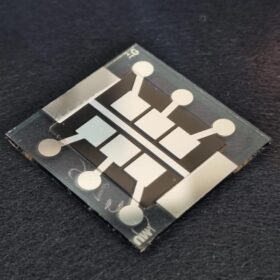
Scientists build high temperature-resistant perovskite solar cell with 26% efficiency
LMU researchers have developed a dual molecular reinforcement strategy for perovskite solar cells that strengthens grain boundaries, improving both durability and performance.
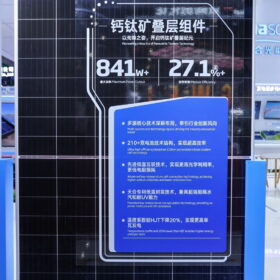
Guidelines to assess three-terminal, four-terminal tandem solar cell performance
Researchers in the U.S. have developed a set of guidelines and protocols to assess the performance of three-terminal (3-T) and four-terminal (4-T) tandem solar cells, including those with subcells made of III–V, CdTe, perovskites or silicon materials.
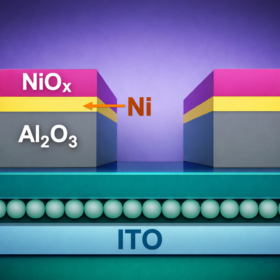
Korean researchers build back-contact perovskite solar cells with lower recombination losses
The research team developed the perovskite solar cell with a spin-coated bilayer tin oxide electron transport layer that boosts charge extraction, achieving a 4.52% efficiency and improved stability.
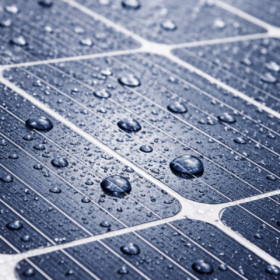
Hybrid perovskite solar cell generates power from sun and rain
Researchers at ICMS in Seville have developed a hybrid perovskite solar cell that generates electricity from both sunlight and raindrops, using the photovoltaic and triboelectric effects. A fluorinated CFₓ polymer layer enables water resistance, triboelectric energy harvesting, and high light transparency without reducing solar cell efficiency.

Power Roll testing new metrology for perovskite solar
The UK-based perovskite solar PV specialist has announced a new metrology research project with Swansea University and a new development agreement with Renolit, a German plastic films, sheets and polymer solutions company.

Korean scientists build mini perovskite solar module with 22.56% efficiency
GIST researchers have developed a perovskite mini-module with 22.56% efficiency by improving the SnO₂ electron transport layer with PEI, reducing defects and electron loss. The module retained 94% of its performance after 500 hours, highlighting potential for scalable, stable perovskite solar cells and modules.
Chinese startup claims record-breaking 27.87% efficiency for single-junction perovskite solar cell
Shenzhen-based SolaEon has reported a 27.87% efficiency for a single-junction perovskite solar cell on a 0.076 cm² lab device, certified by China’s National Photovoltaic Industry Metrology and Testing Center.
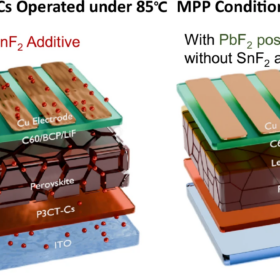
Scientists build tin lead perovskite solar cell with 24.07% efficiency
A Chinese-Swedish research team has boosted the performance of tin-lead perovskite solar cells by modifying additives and post-treatment processes. The device also demonstrated improved stability, retaining 60% of its initial efficiency after 550 hours at 85 °C under maximum power point conditions.

Scientists achieve 32.6% efficiency in perovskite-silicon tandem solar cell via interface engineering
Researchers from KAUST, TU Delft, and LMU Munich have improved the performance of monolithic perovskite-silicon tandem solar cells by modifying the physical structure at the front of the bottom heterojunction solar cell.
