
Only5mins! – The steeplechase of perovskite solar
The potential of perovskite solar cells and modules is still held back by issues such as stability and efficiency losses when scaling up from cell to module. But Annalisa Bruno, a scientist at Singapore’s Nanyang Technological University, says most of these challenges could be overcome in the near future, with this technology extending from building-integrated PV to conventional solar projects.
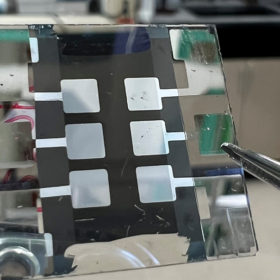
All-perovskite tandem solar cell with 27.1% efficiency via gas quenching
The US National Renewable Energy Laboratory (NREL) has achieved remarkable efficiency and stability for a wide-bandgap all-perovskite tandem solar cell. The scientist developed the device with an inverted architecture and used gas quenching instead of an antisolvent in the manufacturing process.
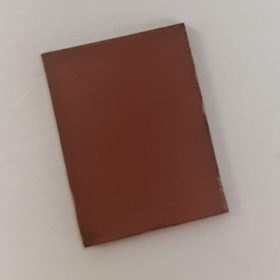
First attempt to build solar cells based on gold polyhalide hybrid perovskite
Scientists in Sweden have proposed the use of gold polyiodide compounds in monolithic perovskite solar cells. They built a lead-free device that achieved an efficiency of 0.052%.
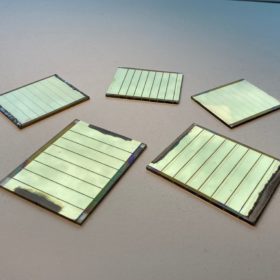
Techniques to build thermally co-evaporated mini perovskite solar panels
Scientists in Singapore have reviewed all thermal evaporation techniques for the production of perovskite solar cells and modules. Despite limitations, the new methods could lead to high production throughputs and more efficient products.
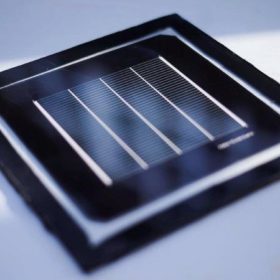
Meyer Burger to commercialize 29.6%-efficient perovskite tandem solar cells
Meyer Burger is working with several research institutes in Switzerland and Germany to integrate perovskite tandem technology into its manufacturing processes.

Australian researchers patent additive for perovskite’s stability problem
University of New South Wales (UNSW) researchers in Australia have discovered a low-cost way to stabilize perovskite solar cells with a triple function additive. Perovskite cells have shown the best stability results with it so far.
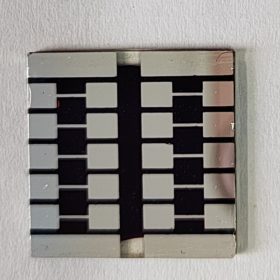
Inverted perovskite solar cell with 22.15% efficiency, 83.92% fill factor
Chinese scientists have used daminozide as an interlayer and additive to make a perovskite solar cell with a p-i-n structure. It has the highest efficiency and highest fill factor for a polycrystalline, MAPbI 3-based inverted perovskite solar cell to date.
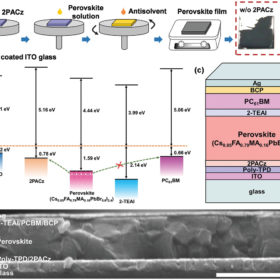
Inverted perovskite solar cell with 21.85% efficiency via surface modulator
A UK research group has used surface modulators to reduce non-radiative recombination in perovskite solar cells. They used 2-TEAI organic halide salt to build a cell with high power conversion efficiency and stability.
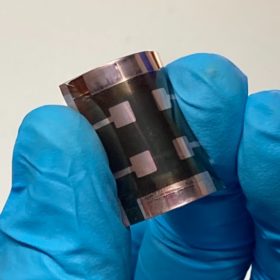
Flexible all-perovskite tandem solar cell with 23.8% efficiency, improved voltage
A Chinese-Swiss research group claims to have overcome two major challenges for the development of flexible all-perovskite tandem solar cells – voltage losses and the deposition process for the cell’s functional layers. They built a device with a high open-circuit voltage of 2.1 V.
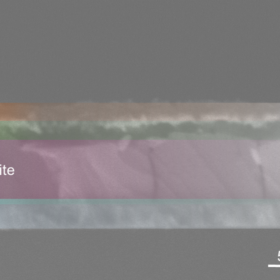
Perovskite solar cell with copper electrode hits 20.1% efficiency
Chinese researchers have developed a new solar cell with a planar n-i-p structure and an indium tin oxide (ITO) substrate. It also has a tin(IV) oxide (SnO2) buffer layer, a perovskite layer, a hole transport layer (HTL), and a layer made of copper. It was able to retain around 92% of its initial efficiency after 1,000 hours.
