
Weekend Read: New turf for thin films
Thin-film technologies have long promised to make a major impact on the solar industry but have largely been constrained to niche applications and research labs if they were not shredded by the market. After several false starts, current trade dynamics and promising research programs may help solar thin films find their place in the sun.
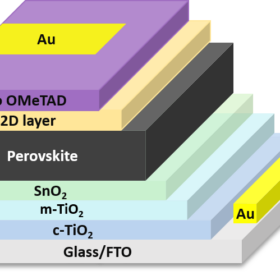
3D/2D perovskite solar cell treated with substituted PEAI hits 23.08% efficiency
An international research team has fabricated a quasi-2D perovskite solar cell with a special kind of phenethylammonium iodide (PEAI) salt to enhance hole extraction. The result is a 23.08%-efficient device that is also able to retain 95% of its initial efficiency after 900 hours.
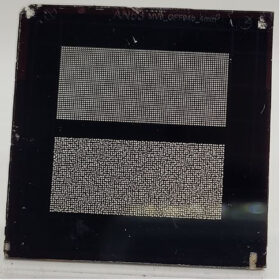
Translucent tandem perovskite-perovskite solar cells for BIPV
An international research group has made translucent perovskite solar cells to maintain decent levels of average visible transmittance (AVT) while offering higher efficiency. They tested different module and cell configurations and produced a two-terminal, perovskite-perovskite tandem device with an efficiency of 17.7% at 12% AVT.
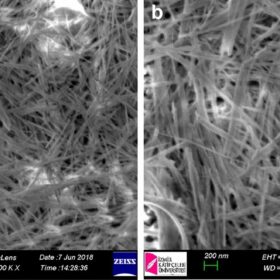
‘Natural clay’ additive promises gains in perovskite solar cell efficiency, stability
Scientists in Turkey have demonstrated that sepiolite, a naturally occurring clay substance, can be added to perovskite precursor materials, and form a scaffold layer that can improve the efficiency and stability of the cells. The scientists believe that this substance could be valuable in developing reproducible processes for the production of large-area perovskite solar cells.
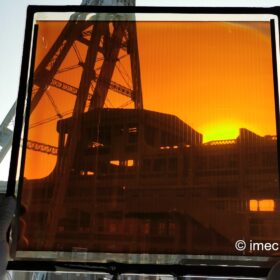
Imec unveils 781 cm2 bifacial perovskite solar panel with 11.9% efficiency
Scientists in Belgium have developed perovskite solar panels with a thermally stable device stack. The encapsulated bifacial panels they created with this configuration were able to retain around 92% of their initial efficiency after 1,000 hours.

Copper thiocyanate to eliminate moisture leaks in perovskite PV cells
Indian scientists have replaced Spiro-OMeTAD with copper thiocyanate (CuSCN) as a hole-transporting material in a perovskite solar cell. They say that the new precursor can offer the same efficiency levels, while reducing moisture leakage.
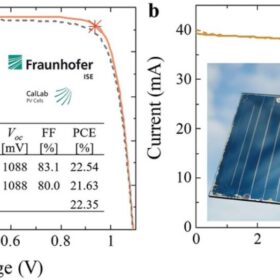
Slot-die coated perovskite PV cell with precursor ink hits 22.54% efficiency
German researchers claim to have reduced ribbing effects in using slot-die coating for the production of perovskite solar cells. The results are reportedly the most efficient solar cell built with this technique to date.
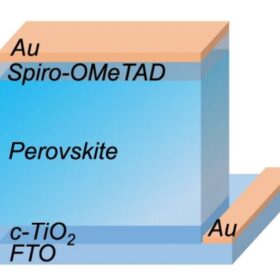
Perovskite solar cell with 25.3% efficiency via new ligand
A research group in China has designed a perovskite solar cell with a new ligand known as 3-amidinopyridine. These molecules are reportedly able to efficiently reduce anion vacancy defects, thus ensuring higher power conversion efficiency and remarkable stability.
Only5mins! – How a floating solar-powered artificial leaf generates synthetic fuels
University of Cambridge researcher Dr Virgil Andrei sits down with pv magazine to discuss an innovative ultra-thin film device capable of generating clean synthetic fuels while floating merrily on the River Cam.
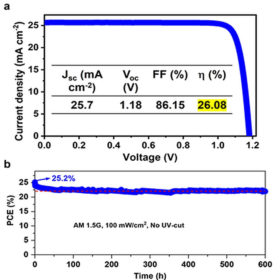
Perovskite alkylammonium chloride solar cell achieves 26.08% efficiency
The US National Renewable Energy Laboratory (NREL) has certified that a South Korean research team has achieved a 25.73% efficiency rating with a perovskite PV cell based on alkylammonium chlorides. The champion device built by the scientists reached an efficiency of 26.08%.
