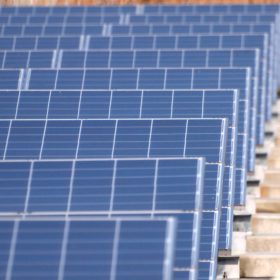
EIB greenlights €18 million loan for 65.6 MW Polish PV project
The funds will be used by Polish developer Energy Solar Projekty sp.z o.o. to build 66 PV projects selected in Poland’s auction scheme for renewable energy projects not exceeding 1 MW in size.
Dutch grid operators won’t have to compensate for deactivated solar rooftops
Minister of economic affairs and climate change, Eric Wiebes, has written to parliament to confirm grid companies do not have to pay PV system owners when their installations are disconnected from the network due to capacity issues or poor-quality voltage.

France embraces solar with viticulture, arboriculture and market gardening
The French government has selected seven agrivoltaic projects with a total generation capacity of 12 MW in its latest tender for innovative PV technology.

Israeli national lottery supports rooftop PV program with $0.12/kWh feed-in tariff
The incentive scheme awards a 23-year, $0.12/kWh feed-in tariff to rooftop arrays with a generation capacity of up to 200 kW. Already, 141 municipalities have applied to install 116 MW of rooftop solar capacity and the government has increased the program’s budget from $28.5 million to $143 million.

Another 500 MW of unsubsidized solar for Denmark
German PV asset manager Encavis and Danish renewables company Greengo have already secured approval for one large project.

It may be safe to put PV panels in landfills, but that doesn’t mean we should
According to a new report from the International Energy Agency (IEA), health risks from lead in crystalline silicon PV panels are one order of magnitude — or about one-tenth — below the risk levels set by the U.S. Environmental Protection Agency.

Albania’s 140 MW PV tender concludes with final price of €0.02489/kWh
The project was awarded to French developer Voltalia. The plant will be located in the Karavasta area, in the centre of the country.

Another Romanian oil company unveils solar plans
Romanian petroleum transport services provider Conpet announced plans to install PV plants across five of its facilities. Initial investment will be limited to 3 million ROL ($680,000), but the group aims to create a renewable energy business unit under its 2020-2025 strategy.

Innovation promises cheaper solar cell glass manufacturing
Scientists have developed a hybrid production method combining metal mesh and a metal-oxide layer over a glass substrate which they say brings down production cost by 80% compared to the tin-doped, indium oxide-based technology currently in use.
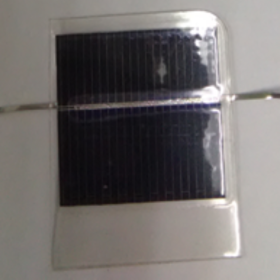
Pouch lamination technique for solar cell encapsulation
Scientists in India have used a pouch laminator to encapsulate a polycrystalline solar cell. The resulting device, the researchers claim, showed better UV photon absorption than solar cells treated with a polymer surface coating.
