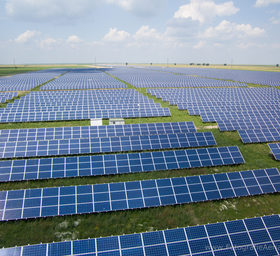
Romania to hold first renewables tender in H1 2022
Romania will likely allocate several gigawatts of solar power through a range of procurement exercises over the next four years. According to the Romanian Photovoltaic Industry Association, there are currently between 20 GW and 30 GW of large-scale renewable energy projects in various stages of development, with several hundred megawatts potentially set to go online this year.

South Korea allocates 2.2 GW in PV tender, final average price comes in at $0.119/kWh
Selected projects will be awarded a fixed rate under a 20-year contract under the country’s renewable energy certificate (REC) scheme and will sell electricity to local power distributors.
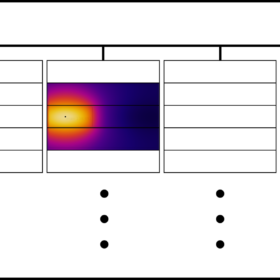
Novel design for shingled solar modules
Researchers in Singapore have created a flexible framework for designing hotspot-resistant shingled modules. Their work is claimed to be perfectly compatible with existing manufacturing techniques.

Mozambique’s first floating solar project
The floating array is planned for a water reservoir in Chicamba, in Manica province. Consultants are now being sought for the feasibility studies.

GAF Energy launches Timberline nailable solar tile
GAF Energy manufactures its Timberline solar tiles at a new facility in California. It claims that the Timberline Solar roof system is unique because it directly integrates solar technology into traditional roofing processes and materials.

The Hydrogen Stream: China Yuchai unveils hydrogen engine, Monolith secures $1bn to expand Nebraska facility
Elsewhere, the ‘world’s first hydrogen racing truck’ has set out on this year’s Dakar Rally, with sponsorship from Saudi Aramco, and French hydrogen equipment business McPhy has been selected as preferred supplier for the GreenH2Atlantic project in Portugal.

India added 935MW of private-contract backed solar in first nine months of 2021
That meant the nation reached a cumulative 4.8GW of “open-access” solar generation capacity by the end of September. At that point, there were also more than 1.1GW of open access projects in the development pipeline, according to analyst Mercom India Solar.

Heat-protective film to reduce solar module temperature by 3.5 degrees Celsius
An international research team has tested a holographic film based on prismatic concentrators that was presented by Russian scientists last year and is claimed to significantly reduce the operating temperature of solar modules, including that of thermal-photovoltaic devices. According to the new findings, the film is able to lower the operating temperature by around 3.5 degrees Celsius.
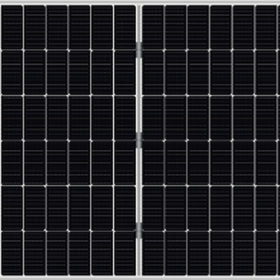
Jolywood launches 615W TOPCon solar module and all-black panel for residential segment
The Chinese manufacturer has launched two new bifacial products based on its n-type TOPCon 2.0 cell technology. The JW-HD156N panel has a power output of 615W, a front side efficiency of 22% and is intended for utility scale projects. The second product, called JW-HD108N, is an all-black panel with a power rating of 425W, for the residential segment.

Viessmann and 50 Hertz integrate heat pumps to stabilize German grid
The partner companies say smart heat pumps can offer flexible capacity that network operators can use for safe operation and households could also benefit from a reduction in electricity prices.
