
EBRD may finance ACWA’s 200 MW solar plant in Egypt with $54 million loan
The $155,4 million project was secured by the Saudi energy giant through a tender held in 2019. The facility will sell power at a price of $0.02752/kWh.

Light and shade of 500 W plus solar panels – part III
In the third article in a series, pv magazine editor Pilar Sánchez Molina and industry experts continue their discussion on the challenges and opportunities created by new panels with power output exceeding 500 W.
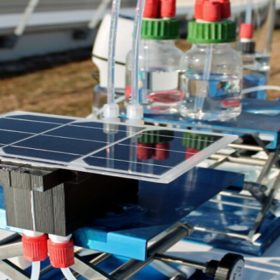
Different combinations of PV-powered electrolysers
An EU-funded research project coordinated by German research institute Helmholtz-Zentrum Berlin has tested several configurations for solar-powered hydrogen generation. First results showed which may be the most suitable PV technologies for electrolysis.
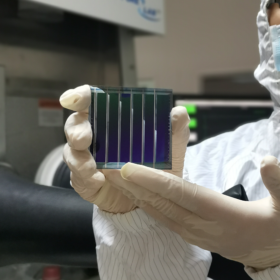
Organic solar module with 14.4% efficiency
Scientists in China have developed an organic module with an area of 18 cm2 based on a non-fullerene acceptor called DTY6. The device has a certified efficiency of 13.98%, but when a non-halogen solvent was used, it even reached 16.1%.
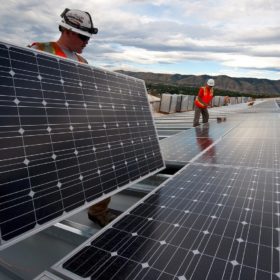
Repositioning Australian rooftop PV
A University of South Australia study has shown that solar owners selling electricity to the grid should position their panels to minimize the discrepancy between peak use and peak production.

Germany to tender 18.8 GW of PV by 2028
The German government is planning to tender 5.3 GW in the rooftop segment and 13.5 GW for large-scale PV projects.
Chinese PV Industry Brief: New EVA encapsulant factory, 1 GW PV pipeline
Cybrid, a Shanghai-listed backsheet supplier, will open a new EVA encapsulant factory in Zhejiang province. Datang, meanwhile, has revealed plans to build 1.05 GW at 10 sites across three provinces.
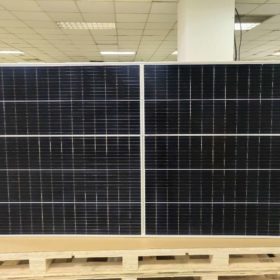
Light and shade of 500 W plus solar panels – part II
In the second article in a series, pv magazine editor Pilar Sánchez Molina and industry experts keep discussing the challenges and opportunities created by new panels with power output exceeding 500 W.

Niger holds firm on plan to build solar park at diesel-fueled thermal plant
The solar plant is expected to have a capacity of up to 60 MW and will be located at the 100 MW Gorou Banda thermal power station commissioned in 2017.

Computational method shows Italy may install 144.5 GW of PV by 2050
According to a new study, PV may reach an installed power of 144.5 GW in Italy by the end of the first half of the century, followed by onshore and offshore wind with 59.6 GW and 17.6 GW, respectively. The research is based on a new computational model that identifies the best spatial distribution of renewable energy sources in an individual country or electricity system while avoiding problematic concentrations of technologies
