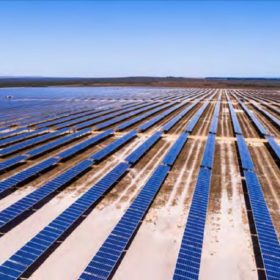
Western Australia seeks proposals for 1.5 GW of green hydrogen
The Western Australian government is talking to developers around the world about building a 1.5 GW wind and solar hydrogen hub at the Okajee Strategic Industrial Area. The state’s Mid West region has some of the world’s best solar and wind resources and they could drive the development of a local green hydrogen economy.
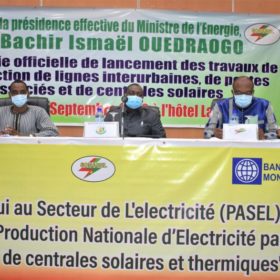
Construction begins on 30 MW of solar in Burkina Faso
Work has started on PV plants with generation capacities of 20 MW and 10 MW. The facilities will be located in Koudougou, in Boulkiemdé province and in Kaya, in Sanmatenga, respectively.

Hemlock Semiconductor becomes vertically integrated polysilicon maker
The U.S. polysilicon manufacturer has acquired DuPont’s trichlorosilane business, in a move that will help it cut production costs and control supply.

Simplified modeling for partially shaded PV systems
A proposed two-diode model is based exclusively on the standard test condition parameters of solar modules and their irradiance levels. The analytical tool reportedly enables PV system operators to estimate the I-V curves of a shaded array quickly and accurately.
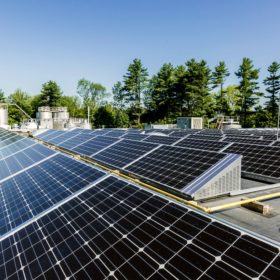
Probabilistic model indicates PV module warranty reliability
U.S.-Spanish researchers have proposed a new way to assess the reliability of PV modules and their warranties. It is impossible to fulfill a 25-year warranty if the threshold of returned modules exceeds 5% and the annual degradation rate is over 0.73%.
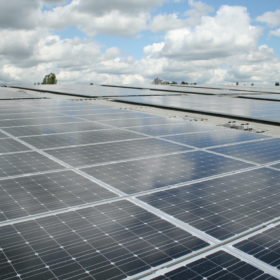
Chinese PV Industry Brief: 1 GW of distributed solar came online in August
More than 1 GW of subsidized small solar arrays were installed in China last month alone and manufacturer Suntech has announced the start of operations at its 500 MW Indonesian cell and module fab.
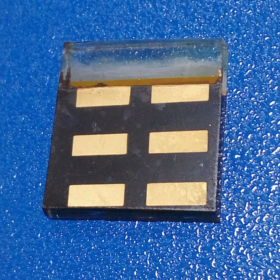
New molecular precursor for kesterite solar cells
Scientists in India have developed a new molecular precursor for applications in kesterite solar cells. They used the precursor to build a superstrate type solar cell with an efficiency that is purportedly among the highest ever recorded. They relied on a low-temperature process to manufacture the device.
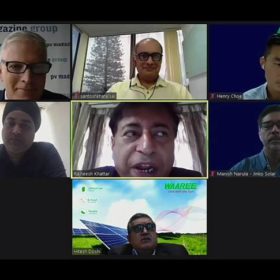
Indian solar leaders call for overhaul to navigate Covid-19
Indian PV manufacturers have highlighted the need to find alternative supply chains and to push automation and Internet of Things applications on the factory floor, in order to keep production running amid raw material and labor shortages.
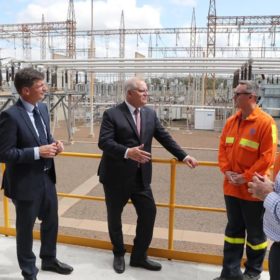
Australian government reduces support for solar, wind
The Australian government has announced new long-term funding and an expanded remit for the Australian Renewable Energy Agency beyond 2022. The funding package, which looks more like a cut than anything else, pushes investment away from solar and wind toward technologies like carbon capture and storage.
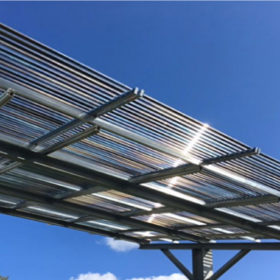
Thin-film agrivoltaic solar tubes
German tech company Tube Solar AG has secured €10.8 million to develop its cylindrical agrivoltaic modules. The lightweight devices could also be used on roofs until now considered unsuitable for PV.
