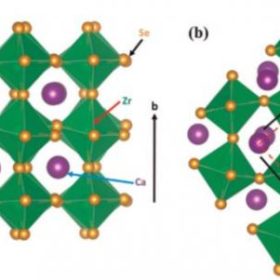
Chalcogenide perovksites for PV energy and waste heat recovery
According to new research, metal chalcogenide perovskites can be used as a thermoelectric material than can convert thermal energy from the sun to usable electric power. These materials, which can also be used to develop perovskite PV cells, are known for their high thermal and aqueous stability, along with their nontoxic elemental composition.
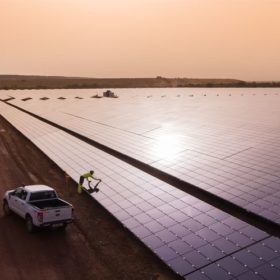
17MW/15MWh storage system for solar plant at gold mine in Mali
Mali is set to host one of the world’s largest off grid solar+storage projects, as a 30 MW solar plant will soon be coupled with a 17MW/15MWh storage facility to power the Fekola gold mine. Finland’s Wärtsilä will supply the battery.
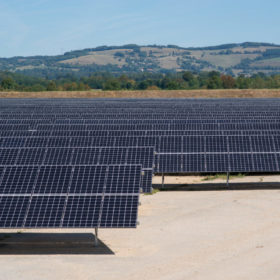
Private solar PPAs signed in France and Germany
French renewables company Voltalia has secured a 25-year power purchase agreement from Crédit Mutuel Alliance Fédérale for a 10 MW solar plant and Germany’s Enerparc has signed a long term deal with Norwegian energy company Statkraft for a solar park planned in Bavaria.

Amazon to build 149 MW solar plant in Spain
The solar project, southeast of Seville, will power Amazon Web Services data centers and logistics locations, and is expected to start generating next year. The company has launched its Climate Pledge with the aim of complying with the Paris Agreement 10 years early by neutralizing carbon emissions by 2040, and of operating with 80% renewable energy by 2024 and 100% renewable energy by 2030.
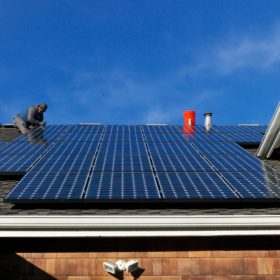
A new sizing approach for PV self-consumption without storage
Spanish researchers are proposing a customer-driven method described as an intuitive tool for investors and engineers to assess how self-consumption from solar generation can be profitable. The method is said to take into account economic parameters such as taxes, depreciation and the cost of financing.

North Macedonian utility plans three more tenders for 110 MW of solar
State-owned Elektrani na Severna Makedonija will begin construction on a 10 MW solar plant at its redundant coal plant in Oslomej after signing the engineering, procurement and construction deal with a Turkish contractor. The utility is planning to tender a 10 MW extension of the plant and two more 50 MW solar facilities.
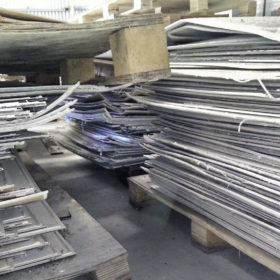
Assessing metal leaching from PV modules dumped in landfill
An Indian research team has analyzed around 300 scientific studies about PV panel waste containing carcinogenic metals. The researchers said solar module recycling is not economically profitable and policy support is necessary to avoid panels being dumped in landfill.

Hanergy-owned Alta Devices reportedly lays off 250 employees without notice
The U.S. business built and sold record-setting gallium-arsenide solar cells but its parent has seemingly run out of patience. Having failed to give its workers notice of the move, Hanergy is either in contravention of U.S. employment law, ‘faltering’ or subject to ‘unforeseen business circumstances’.

France deployed 707 MW of solar in first nine months of 2019
Solar electricity production increased by almost 9.2% in the January-September period, but installations barely changed from the first nine months of the preceding year.

Spain’s Balearic Islands assign 362 MW of solar in auction
The Spanish government has selected 55 solar installations in the procurement exercise. About 256 MW of the projects it awarded will be built on Mallorca, while Menorca, Ibiza and Formentera will host 61 MW, 6 MW and 2 MW of new capacity, respectively.
