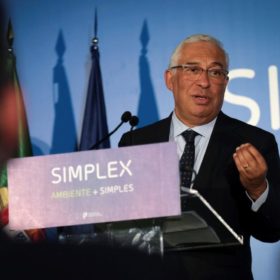
Portugal’s prime minister under investigation for alleged lithium, hydrogen corruption
Portuguese police today raided the residence of the country’s Prime Minister, António Costa, as part of a corruption probe involving lithium and hydrogen. Ministers of Climate Action and Infrastructure, Duarte Cordeiro and João Pedro Matos Fernández, have also been declared formal suspects.
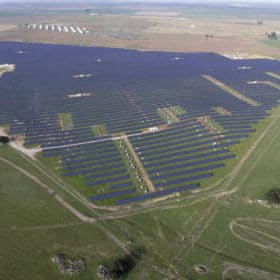
Portugal aims to install 20.4 GW of solar by 2030
The Portuguese government has raised its 2030 solar target by 11.4 GW. It now hopes to cover 85% of its electricity mix with renewables by the end of the decade.

Portuguese group Metalogalva opens US factory
The Portuguese company Metalogalva, which produces metal structures for the photovoltaic industry, has announced the opening of a factory in Memphis, Tennessee, with an investment of $6 million.
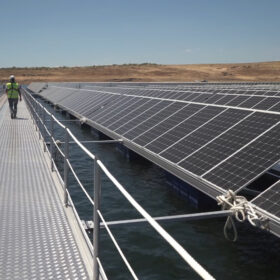
Floating PV in Portugal can exceed national 7 GW target
Researchers from the University of Évora have concluded in a study that the installed capacity of floating solar systems can exceed the 7 GW target defined in the country’s National Energy and Climate Plan 2030.
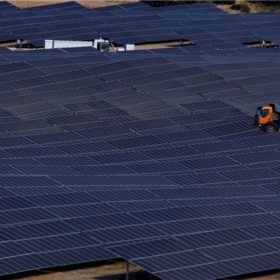
Iberdrola, Prosolia secure approval for 1.2 GW of solar in Portugal
Iberdrola says it will build the massive Fernando Pessoa solar facility in Santiago do Cacém, about 200 kilometers south of Lisbon.
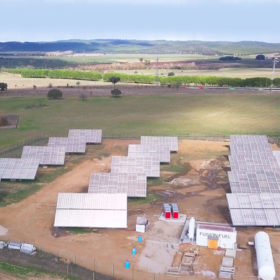
Portugal reveals first details of upcoming green hydrogen tender
The Portuguese authorities plan to award 10-year contracts to developers for 3,000 tons of green hydrogen and 10,000 tons of renewable methane.

EU’s first hydrogen pipeline to connect Portugal, Spain, France
The leaders of Spain, Portugal and France have unveiled the H2Med energy interconnection project, which will supply Europe with hydrogen. H2Med, formerly known as BarMar, will be the first green corridor to connect the Iberian Peninsula with the rest of Europe. It will be operational in 2030.
Portugal cuts environmental approvals for utility-scale solar projects
Portugal’s new environmental rules will apply to PV projects built on sites spanning less than 100 hectares, but they will not apply to installations in protected areas.
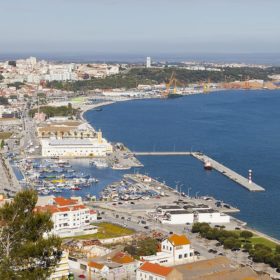
Large scale PV projects proliferate in Portugal
Analysis from Aurora Energy Research shows around 4.3 GW of solar projects secured grid-connection permits to date in Portugal. Data also shows a record 1.2 GW of solar projects requested generation licenses in the first seven months of the year, smashing previous records.
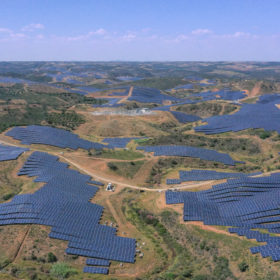
Portugal offers remuneration boost to solar auction winners
The Portuguese government said in a new legal decree that it will adjust the prices, according to inflation, of winning bids from its record-breaking solar auctions in 2019 and 2020. It will also extend the period during which projects can sell electricity at spot market prices by 12 months.
