
Canadian gas giant to build 325 MW pumped hydro project in Australia
Canadian behemoth Atco has purchased the rights to develop the 325 MW Central West Pumped Storage Hydro Project in Central West New South Wales and credits the investment to policy certainty from the NSW Government. As a significant firming agent the project is ideally placed in the state’s proposed Central West-Orana Renewable Energy Zone.
General Electric to build 400 MW pumped-hydro storage project in Australia
A proposed 400 MW pumped-hydro storage project is on track to become the first of its kind in more than three decades in Queensland, Australia. GE Renewable Energy is backing the plan.

Sustainable pumped-hydro across 616,818 sites
Australian researchers have identified more than 600,000 sites suitable for closed-loop pumped-hydro energy storage projects across the globe. “Off-river” pumped-hydro is not only able to overcome the typical topographical issues of conventional pumped-hydro but is also cheaper.

Plans for 50,000 hydrogen-powered taxis in Paris
European electric transmission company body ENTSO-E has unveiled details of a project to install 11 GWh of electrolyzed hydrogen storage capacity across ten locations around the French capital by the end of the decade.
Australian state plans 12 GW of renewables, 2 GW of pumped hydro by 2030
New South Wales has published a new infrastructure plans that brings together targets and policy adjustments, as the state government strives to retire coal-fired generators and fire up the economy.
Seasonal storage: alternatives to the alternative
In an update to a report it published earlier this year, Norway-headquartered consultancy DNV GL outlined the role it sees for both seasonal heat storage and pumped hydro to help manage the 1.4 TW of variable renewable energy capacity it forecasts to be connected to European electricity grids by 2050. DNV GL maintains the original report’s conclusion that where seasonal storage is concerned, hydrogen will be the first option.
Historic-low interest rates will power ahead astonishing solar cost reductions
An Ieefa report has suggested the cost of generating electricity from solar will be near zero in the world’s sunniest regions by 2030-40 – despite what the naysayers at the International Energy Agency might think.
Sector coupling in Europe could see solar and wind demand double
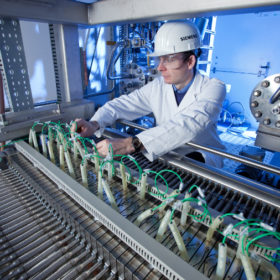
Market intelligence firm BloombergNEF has published a report with power company Statkraft and clean energy distributor Eaton highlighting the importance of sector coupling for Europe’s decarbonization plans. Analysts examined the power markets of Germany and the U.K. and concluded effective sector coupling including the use of green hydrogen could lead to greenhouse gas emission reductions of 83% by 2050.

The year in solar, part IV: More storage and hydrogen advances as solar just kept getting cheaper
Battery innovations started to come thick and fast this quarter as the hunt for alternatives to lithium-ion intensified and the latest slew of solar tenders indicated the relentless pressure on solar power generation costs was showing no sign of abating.

Coupling pumped hydro with renewables and other storage technologies
The combination of pumped hydro with other storage technologies can increase renewables penetration, improve operational safety and reduce maintenance costs at large-scale hydropower plants, according to new research. The study also focuses on techniques to determine the optimal size of renewables-based pumped hydro storage systems. Costs for hybrid solar-pumped hydro projects currently range from $0.098/kWh to $1.36/kWh.
