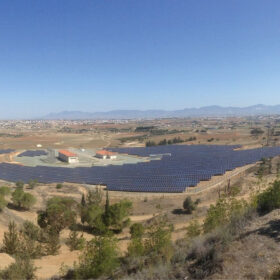
Cyprus solar curtailment hits 47% in 2025
Cyprus wasted nearly half of its distributed renewable generation in 2025, equivalent to 306 GWh, as grid constraints and lack of battery storage forced massive curtailments while solar capacity keeps growing.

Brazil solar curtailment hits 20% as renewables strain grid infrastructure
Renewables curtailment in Brazil in the first half of 2025 is straining investment and highlighting grid and transmission limits, with analysts calling for clearer pricing and storage solutions.
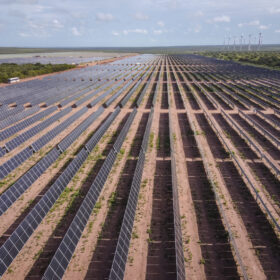
Brazil PV curtailment hits 14% as Voltalia seeks compensation deal
Voltalia has reported a 14% cut in its Brazilian PV output in the first half of 2025. The company expects curtailment to stay near 12% to 15% until 2027 and ease from 2028.

PV curtailment jumps 97% in Germany in 2024
Solar curtailment increased by 97% in Germany last year, driven by rapid growth in PV deployment and unusually high solar radiation in the summer, according to the Federal Network Agency (Bundesnetzagentur).

Northern Ireland doubles solar curtailment in 2024
Northern Ireland turned down 16.9% of its solar in 2024, up from 7.9% in 2023.
Cyprus curtails 29% of renewable energy in 2024
Cyprus curtailed 29% of its renewable energy in 2024, a record high that signals risks to the island’s energy transition.

Curtailing solar photovoltaics is here to stay, overbuilding PV will become normal
As the penetration of variable renewable energy increases, curtailment of solar PV generation will only increase. Since curtailment will almost always be cheaper than investing in new transmission capacity or new grid-scale storage, curtailed energy should be rewarded, so that PV investment decisions can include curtailment as one of the flexibility options for grid operators.
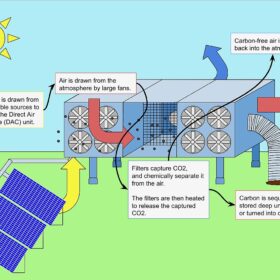
Coupling PV with direct air capture
Researchers in China have suggested to combine PV plants with direct air capture (DAC) technologies in an effort to reduce solar curtailment and increase DAC competitiveness. They found that the proposed combination could become viable by 2030, especially if carbon prices will increase.

New algorithm may help mitigate unequal power curtailment
Developed by researchers in South Africa, the proposed technique is based on the water cycle algorithm (WCA), a population-based metaheuristic optimization algorithm that is inspired by the water cycle process in nature and how streams and rivers flow into the sea.
Chinese PV Industry Brief: NEA moves forward with curtailment plan
China’s National Energy Administration (NEA) says that utilization rates of solar and wind projects in specific provinces must not fall below 90%.
