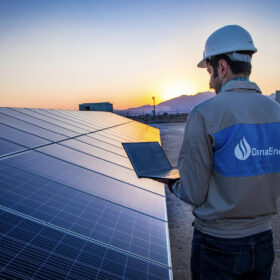
Modern slavery and other clean energy ESG risks
Despite debates in some parts of the world, we can expect environmental, social, and corporate governance (ESG) regulation to continue making headlines in 2025. Everoze Partner Ragna Schmidt-Haupt demystifies the key sustainability risks and opportunities for solar and battery energy storage system (BESS) projects.
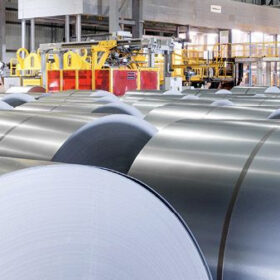
UP: Steely determination
US-based Origami Solar has overcome two key challenges to replace aluminum solar module frames with steel products. The company says it can offer improved performance and a compelling value proposition, particularly for module makers setting up outside China. pv magazine caught up with Origami Solar CEO Gregg Patterson to discuss steel frames and the company’s expansion plans.
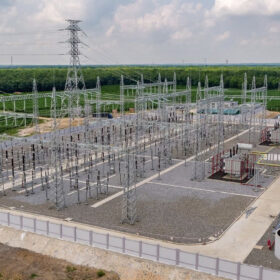
A tumultuous year for solar and batteries
In five key trends, pv magazine looks back over a year that saw PV module prices fall lower than many thought possible, while demand was restrained by grid congestion, among other challenges. Energy storage has had a strong year and geopolitics is seeing solar and battery manufacturing enter new regions as competition drives technical innovation.
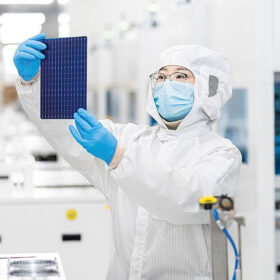
How will PV’s intellectual-property scuffles shake out?
Lawyers are doing brisk business as tunnel oxide passivated contact (TOPCon) solar technology moves into the mainstream. A series of patent infringement cases have been launched in the United States and Europe and their impacts are reverberating through the marketplace. How likely is it that winners will emerge?

Addressing ESG in an ultra-low-cost environment
Shifting requirements for supply chain traceability and carbon footprint disclosure, along with solar oversupply and unsustainably low module prices, have made 2024 a challenging year for PV manufacturers. Despite these obstacles, the industry remains committed to its crucial role in the global energy transition. pv magazine recently spoke with Haimeng Zhang, chief strategy and environmental, social, and corporate governance (ESG) officer at Longi Green Energy, about how the sector is preparing to meet these challenges.
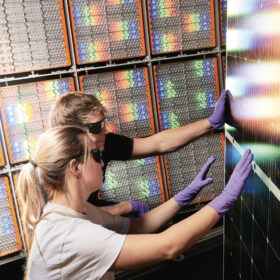
Shedding light on tandem perovskite solar cell progress
Perovskite PV devices are set to become the next big thing in solar with market analysts at S&P Global Commodity Insights predicting 1 GW of production by the end of 2024, rising to 6 GW in 2025. Perovskite tandem devices are at the front of the queue for commercialization but their characterization presents technical challenges.
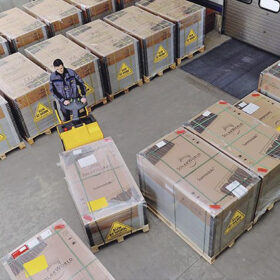
US solar prices double European costs amid regulatory challenges
The requirements of measures such as the Uyghur Forced Labor Prevention Act (UFLPA) mean that solar panel prices in the United States can be twice as much as in Europe.

Competition, oversupply to reduce n-type solar module prices
Global solar demand will continue to grow in 2024, with module demand likely to reach 492 GW to 538 GW. Amy Fang, a senior analyst at InfoLink, looks at module demand and supply chain inventories in a market still affected by oversupply.
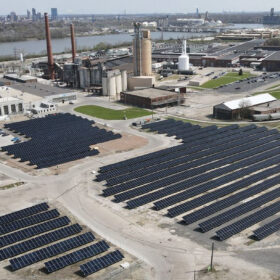
US, Canada ramp up solar glass plans
With PV module capacity ramping up, glass suppliers have been investing in new solar glass production capacity. As in India and China, new facilities are popping up in North America, with unique twists to ensure competitiveness, such as using recycled material.
Weekend Read: Solar giants enter the storage market
Energy storage is the new solar for an increasing number of Chinese PV manufacturers. However, China still requires enabling policies for storage to provide the end-market volumes needed to bolster the fortunes of manufacturers old and new.
