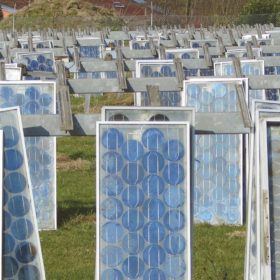
Blockchain for PV module recycling
Next Energy and Marubeni are developing a blockchain tech for PV module inspection – with the support of the Japanese government – which they claim is able to provide data on a panel’s traceability and components as well as verifying that the data were not modified or tampered with.

Proper recycling could help perovskite modules to outcompete rivals
Proper recycling strategies for perovskite modules could ensure sustainability and improve energy payback times, according to US researchers. They claim that the best recycled perovskite cell architecture could produce an energy payback time of about one month, versus 1.3 to 2.4 years for crystalline silicon modules.
India could have 2.95bn tons of solar waste by 2047
Researchers led by the Indian Institute of Technology Delhi have projected the waste expected from end-of-life solar panels and related components. They assumed 347.5 GW of total installed solar generation capacity would be reached this decade. The academics said the waste would include critical metals worth around $645 trillion, 70% of which could be recovered.
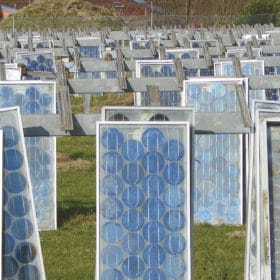
Managing solar PV waste in India
A new report compares the regulatory frameworks of the European Union and India to manage end-of-life solar panels. It also assesses and analyzes the PV waste market and processing capacities in India, while sharing recommendations for Indian stakeholders.
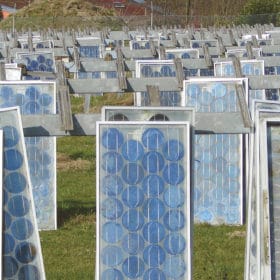
Reusing PV modules poses opportunities and challenges
In a new study, PV Cycle and Imec/EnergyVille examine the growing PV module reuse sector and detail both the opportunities and challenges of employing second-hand systems, especially in developing countries.
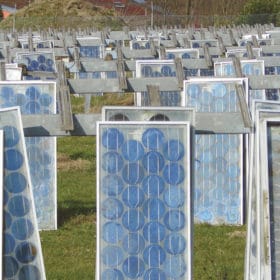
Australia expects 100,000 tons of waste PV modules by 2035
Researchers at the University of South Australia are spearheading a national push to establish a stewardship scheme to manage the impacts of PV systems through their life cycle, as increasing numbers of decommissioned solar PV modules threaten a waste management nightmare.

Australia’s first large-scale PV recycling operation amps up ‘waste’ collection
Reclaim PV is now one step closer to ensuring that solar generation lives up to the promise of providing clean energy throughout its life cycle, and that repurposing its component materials becomes viable.
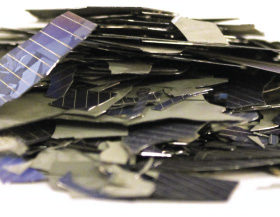
Establishing a solar module recycling system in India
Ankit Kapasi and Kishore Ganesan from SOFIES India are working on the Solar Waste Action Plan (SWAP) project in India, which is looking to investigate both the technical and economic feasibility of a PV module recycling system in the country. The pilot has been funded by Signify Foundation and Doen Foundation. The team at Sofies is working closely with technology partner Poseidon Solar and established the first PV recycling pilot plant in September 2020. The duo spoke to pv magazine India about their plant’s techno-commercial feasibility and the Indian eco-system’s readiness for PV module recycling.
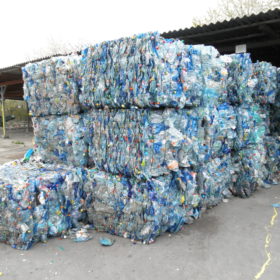
New process to recover PET and EVA from recycled solar panels
Researchers in China are proposing a new technique to recover polyethylene glycol terephthalate (PET) and ethylene-vinyl acetate (EVA) in solar panels at the end of their lifecycle. The two materials represent around 15% of the total material in a wasted solar cell, with a share of 10% for EVA and 5% for PET, respectively.

New method to recover silicon from end-of-life modules
Compared to other techniques based on chemical reactors and organic solvents, the proposed method is said to be able to maintain a “good mechanical yield” in the recovered solar cells. According to its creators, this technique allows the reuse of silicon from the recycled panels in the production of new solar cells.
