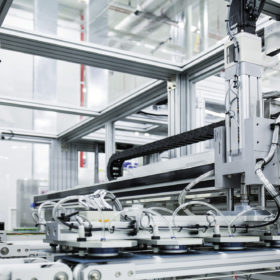
Hanwha Q Cells unveils plan to produce perovskite, TOPCon solar modules
The $1.28 billion plan includes a 3.1 GW production capacity expansion in South Korea, where the company’s solar module capacity will reach 7.6 GW by 2025.
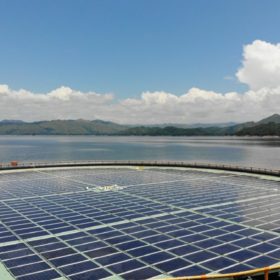
The world’s first large scale hybrid hydro-floating solar power plant
A Norwegian consortium led by Scatec is planning to build a hybrid hydropower-floating PV plant at an unspecified location in West Africa. Building both facilities simultaneously will help its developers define a series of parameters for proper sizing, optimization and design, and set a benchmark for future projects of this kind.

Impact of increasing PV module prices on Indian market
Modules account for a huge percentage of a project’s total costs, and given that independent power providers have lower margins in the Indian solar energy sector, even a small increase in module pricing can put them under more strain.
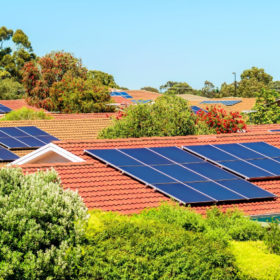
South Australian electricity network’s rooftop PV trial set for launch
Since July 2020, SA Power Networks has been refining technology and stakeholder engagement mechanisms to enable dynamic solar exports to the grid, potentially ending an era of severe export limits on new customers in rooftop-solar-rich parts of the South Australian network and other jurisdictions.

EUPVSEC 2021 – Key takeaways
Now in its 38th year, and its second as a fully virtual event, the 2021 EU PVSEC conference revealed a solar industry and research community filled with confidence. Discussions at the event began with the expectation that demand for solar will continue to grow rapidly, and focused on the challenges of further scaling up production and deployment, and ensuring that energy systems can run smoothly with solar and wind as their main source of energy.
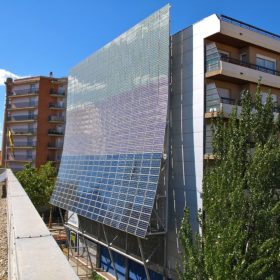
Chinese PV Industry Brief: New alliance for BIPV
Steel manufacturer SSFG and backsheet maker First PV have created a new company to deploy 950 MW of BIPV capacity in China over the next five years. Moreover, China General Nuclear Power Group (CGN) began selling electricity on the country’s green power trading platform and inverter maker Ginlong Solis has decided to team up with State Power Investment Corporation (SPIC).
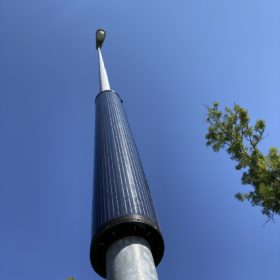
Cylindrical solar panel for street lighting
Developed by an Italian manufacturer, the panel is available in three versions with a power output of 100, 120, and 240 W and has a weight of 5 kg. It is encapsulated in thermoformable plastic technical polymers and can be connected in series with other modules around the same post.
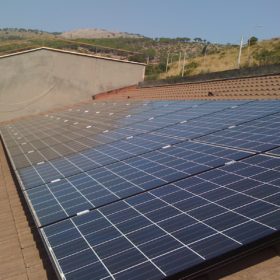
Italy’s Lombardy region adds another €20 million for residential PV+storage
Italy’s richest and most dynamic region continues to support solar+storage installations with rebates.
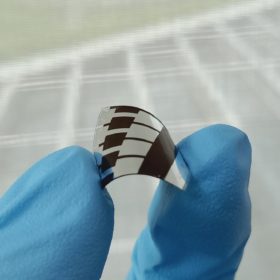
Co-evaporated perovskite solar cell with 20.6% efficiency
Researchers in Singapore have built what they claim is the industry’s most efficient, large-area co-evaporated solar cell. According to their findings, the device has exhibited remarkable thermal stability and could reach commercial maturity within the next few years.
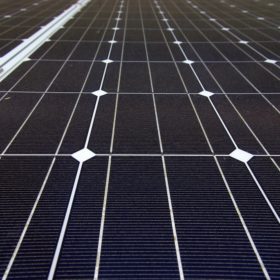
Cooling PV panels with water and cotton mesh
Scientists in Russia have developed an active cooling technique that spreads water on both sides of the module and uses a cotton wick mesh to absorb and spread the water that comes on the rear side. The system is able to reduce significantly a module’s operating temperature and lead to an overall improvement of 30.3% in its output power.
