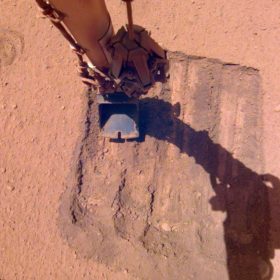
Cleaning solar modules with sand and wind, on Mars
NASA scientists have partially cleaned up the solar modules of the Insight lander operating on Mars, by using grain sands collected nearby and trickling them on the panels during the windiest time of the day. This handmade technique has made it possible, according to them, to increase the PV array’s yield of about 30 watt-hours of energy per ‘sol,’ or Martian day.

Australian research prompts rethink on silicon heterojunction cell production
Defect engineering for silicon heterojunction solar cells has come a long way. But Matthew Wright, a solar researcher at the University of New South Wales, asks whether these proven efficiency gains could be applied more effectively.

Developing standards for solar & wildlife habitat
A group of researchers in the U.S. analyzed recent developments in efforts at dual land use projects, combining solar energy with habitat for pollinators and other wildlife. Based on recent projects and studies, they offer a list of best practices for developing the habitats; and warn that without careful oversight the promising concept could amount to little more than greenwashing.

The Hydrogen Stream: 200 MW electrolyzer in the Netherlands, Russian-French partnership for blue hydrogen
French energy company TotalEnergies and Russia’s second-largest natural gas producer, Novatek, are exploring new opportunities in the development of decarbonized blue hydrogen and ammonia. Anglo-Dutch energy major Royal Dutch Shell has awarded the Australian engineering company Worley a services contract to support the development of a new 200 MW electrolysis-based hydrogen plant in Rotterdam, Netherlands.

Four-terminal III-V solar cell with 32.57% efficiency
Scientists at the US National Renewable Energy Laboratory have simulated a III-V solar cell by stacking gallium arsenide films onto interdigitated back contact silicon solar cells with a glass interlayer. The scientists have already done some initial mini-module integration work, but significant size scaling will ultimately be needed to reach commercialization. The cell currently has an active area of 1 cm2.
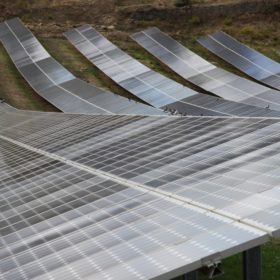
Analysis of Italy’s disappointing fifth renewables auction
“RES1 has not worked,” said operators commenting on Italy’s auction scheme for renewables. The lack of concrete projects to be submitted to the auctions is due to a combination of factors primarily based on “excessive bureaucracy,” and the impossibility of ground-mounted PV projects in agricultural areas to get incentives, they added. Nonetheless, things could soon change, especially if an RES2 scheme is implemented.
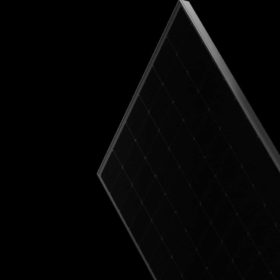
Longi unveils n-type, TOPCon bifacial module with 22.3% efficiency
The 144-cell module is available in six versions with power ratings ranging from 545 W to 570 W and efficiency between 21.3% and 22.3%. The product measures 2,256×1,133x35mm and weighs in at 32.3kg.
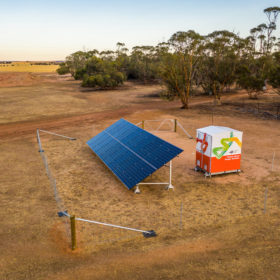
New factory for standalone solar+storage systems in Australia
Solar and microgrid specialist Hybrid Systems Australia has revealed plans to establish the “world’s biggest” standalone power system manufacturing facility in Western Australia.
Giant off-grid solar project to power three cities in DR Congo
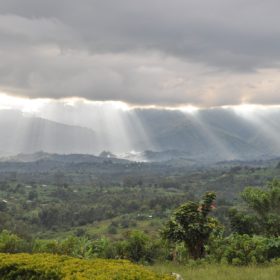
An international consortium led by Powergrids plans to invest $100 million in three off-grid solar plants intended to power the cities of Gemena, Bumba, and Isiro, which are located in the country’s northern region and currently have no connection to the country’s power network.
Portable, grid-connected solar carport
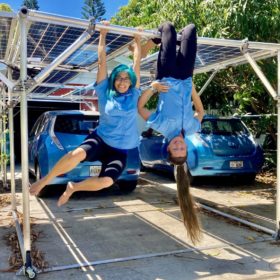
The “Gismo Power” solar carport is entirely mobile, can be connected to the grid, and can be folded for storage.
