
Mobile laboratory for PV module testing
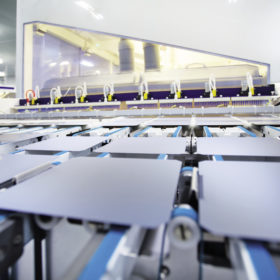
MBJ Solutions and TÜV Rheinland have jointly developed PV TravelLab, which is purportedly the world’s first portable laboratory for PV module tests. It can be used to assess solar panels at any location in the world.
Chinese PV Industry Brief: Increasing wafer prices and new glass and polysilicon orders
Zhonghuan and Longi raised the prices of their wafers before the Chinese New Year holiday. Longi also secured more polysilicon and glass through two different orders, with OCI Group and Flat Glass, respectively.

Mini organic solar module for indoor low-power applications
Under typical indoor illumination of around 500 lux, from light sources such as LED or fluorescent light, the device’s power conversion efficiency is just below 15%. The largest device has an open-circuit voltage of 3.8 V, a short-circuit current of 146 μA, and an output power of 418 μW. The product can also be used in conjunction with capacitors to replace batteries or to prolong their lifetime in low-power applications.
New model to predict PV module cleaning cycles and resulting profits
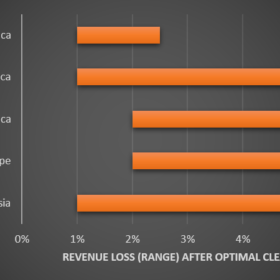
A group of scientists in Bangladesh has developed a model to determine the optimal cleaning schedule for a PV installation at any location in the globe, requiring only the average insolation and soiling rate for a given site to make the calculation. The study also draws new conclusions regarding the influence of sandstorms and rain on soiling, and aims to be among the first studies to paint a global picture of soiling trends by region.
Enercoop signs more solar PPAs in France
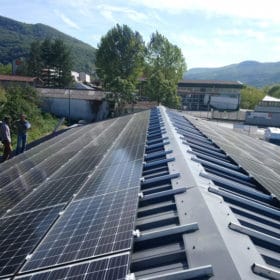
French renewables specialist Enercoop has secured an annual solar power supply of 25 GWh over a 30-year period through three new deals.

Solar-plus-storage vs grid enhancement in Sweden
Sweden saw extraordinary high spot prices during last summer, due to difficult power transmission from the north, where most of power generators are located, to the south of the country, where most of the demand is concentrated. According to Swedish PV association Svensk Solenergy, solar-plus-storage offers a quick and scalable solution to avoid expensive and slow grid improvements.
Assessing the impact of large-wafer modules
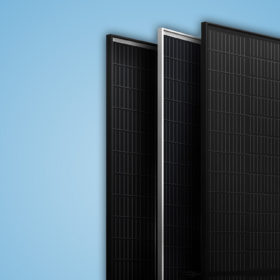
Energy consultancy DNV GL has published new results comparing the performance of modules based on 166mm, 182mm and 210mm silicon cells. The assessment compares Trina Solar’s Vertex modules, which use the largest cell dimension, with unnamed competitors utilizing the other two sizes. Results from system simulations show a clear advantage for the two larger sizes, with 210mm edging ahead in terms of levelized cost of electricity.
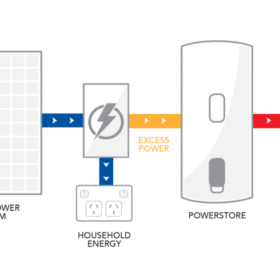
South Australia’s hot water systems set to soak in solar
Around 2,400 South Australians will soon be fogging up the bathroom mirror without qualms about the cost of heating water, as Solahart is set to implement a new trial to control hot water systems.
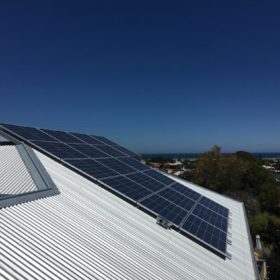
Australia deployed 2.6 GW of rooftop PV in 2020
The rise and rise of rooftop solar PV has established Australia as a renewable energy powerhouse, with new figures from the Clean Energy Regulator (CER) revealing the nation achieved a record in renewable capacity in 2020.

Large-size solar tile from Spain
The product is available both with monocrystalline and CIGS solar cells and is claimed to be the world’s largest solar tile with dimensions of 457 x 510 mm.
