Renewables improve reliability outlook for Australia’s main grid
Australia’s power supply has improved, as new solar and wind capacity are making summer blackouts less likely, says the Australian Energy Market Operator. Timely commissioning of new generation, storage and transmission investment will be critical, given the nation’s aging coal fleet and looming plant closures.

India can’t match Gulf region’s record-low PV tariffs
India’s solar tariffs are some of the lowest in the world, but they’re almost double the Gulf region’s tariffs.
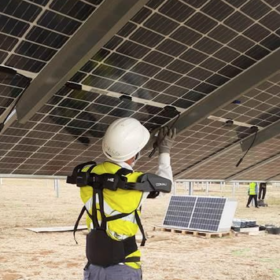
Exoskeletons for solar panel mounting
Endesa, the Spanish unit of Italian power group Enel, is using a new technology in the construction of three solar parks in southern Spain.
Indian developers demand deferral of customs duty on PV panels
India’s Solar Power Developers Association said that the one-year safeguard duty extension has already driven up capital costs. Any additional tariff barriers would jeopardize the Indian government’s “100 GW by 2022” target, it claimed.
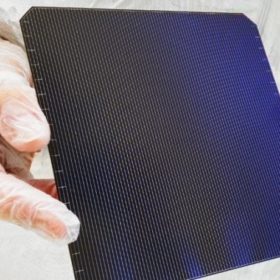
Enel and French PV institute achieved an efficiency of 25.0% for a heterojunction solar cell
The solar cell calibration laboratory ISFH CalTeC has certified the efficiency of the cell, which was made with a standard M2 wafer.
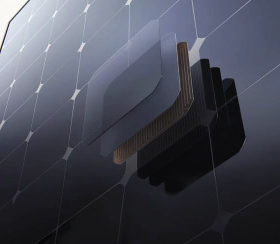
Daily news roundup: SunPower and Maxeon split, Bulgaria to host 400 MW of PV
SunPower and Maxeon Solar Technologies finalized their plan to split into two independent entities, while Austrian solar developer Energy BG 1 revealed plans to build a huge unsubsidized solar project in Bulgaria.

‘Bigger is not always better’
Chinese monocrystalline PV module manufacturer Longi has yet to join the race to produce solar panels with power outputs above 600 W. The decision is line with a clear strategy, a company spokesperson told pv magazine. Outstanding issues for these moduels, according to the manufacturer, include low cell manufacturing yield, system compatibility, concerns about module transport, and hotspot-related failure risks, as well as the need for mechanical loading tests.
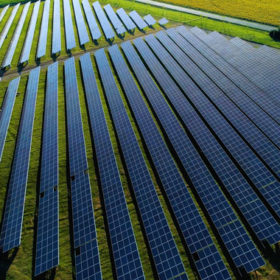
France installed 379 MW of PV in H1
France’s cumulative PV capacity reached 10.3 GW at the end of June. Solar generated 6.7 TWh of electricity in the first half of 2020, compared to 5.9 TWh during the same period in 2019, representing 3.0% of French electricity consumption.
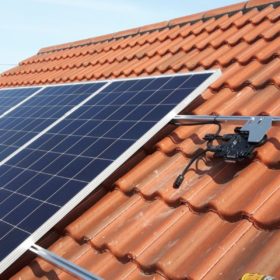
Enphase inverters added to Ikea’s turnkey solar offer in Australia
The California-based energy technology company has announced that its microinverters have been selected for Solargain’s turnkey solar offerings in Australia, including the retailer’s offer in collaboration with the Swedish furniture giant.
Indian state of Gujarat launches 110 MW PV tender
Gujarat State Electricity Corporation Limited (GSECL) has invited bids to set up an aggregate 110 MW of grid-connected solar power plants at several substations operated by Gujarat Energy Transmission Corporation Limited. Bidding closes on September 16.
