Australian government stimulates PV in the face of Covid-19 threat
The federal government’s ‘economic response to the coronavirus’ legislation encompasses the installation of commercial and industrial solar.
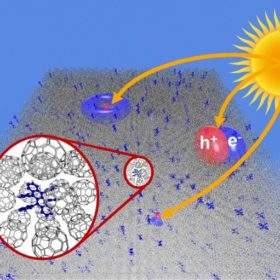
Bad vibes for organic solar cells
Researchers in Germany and Belgium have discovered ‘zero point vibrations’ are responsible for performance limitations in organic solar cells. New strategies to minimize such vibration-induced voltage losses in organic PV should be investigated, say the scientists.

Saudi Arabia reveals prequalified bidders for 1.2 GW PV tender
The Renewable Energy Project Development Office has prequalified 49 developers for the tender. Four large-scale solar projects will be built via the procurement exercise.
Indian company launches 700 MW solar tender
Gujarat Urja Vikas Nigam Ltd. has opened bids to develop 700 MW of solar capacity in India.

More efficient underwater PV cells with wide-band gap semiconductors
U.S. researchers have conducted detailed balance calculations to show the ultimate potential of underwater solar cells. According to their findings, the devices could theoretically produce useful power at up to 65% efficiency in clear waters. However, this would only be possible by using wide-band-gap semiconductors, which have not been considered for solar cells used for land-based applications because their band gaps are too large.

Fossil fuel giants bet on offshore PV
Norwegian energy producer Equinor and Italian oil contractor Saipem have joined forces to build floating PV projects for near-coastal applications. The two companies plan to use a technology developed by Moss Maritime, a unit of Saipem.

European agrivoltaics
According to SolarPower Europe, local agriculture and solar energy could become the engines of a sustainable European economy. The trade body has created a task force, led by French independent power producer Amarenco, that aims to place agrivoltaics at the top of the European agricultural policy agenda, while also establishing global standards for the segment.
How Covid-19 is halting solar development in Germany
pv magazine has spoken to Germany’s largest solar project developers about how construction has ground to a halt on many PV projects in Europe since the beginning of the coronavirus pandemic. Politicians need to extend implementation deadlines for PV projects that are being built under tender schemes, but deadlines are not the only challenge that companies currently face.
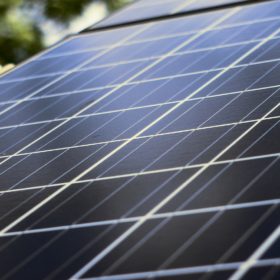
A second life for disused modules and EV batteries
A study led by Bern University of Applied Sciences is moving into the demonstration phase, with projects in Germany, Switzerland, and Belgium. With partners from all over Europe, the Swiss researchers are developing models for how solar modules and batteries from electric cars can still be used in a sustainable way after their lifecycle has ended.
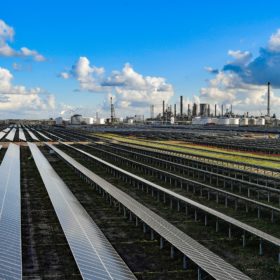
Covid-19: Dutch developers want 2020 deadlines delayed
Netherlands trade body Holland Solar has asked the Ministry of Economic Affairs and Climate Policy for an extension of grid-connection deadlines for solar projects being built under the SDE+ incentive program for large scale renewables. The association also urged Dutch municipalities to keep processing permits.
