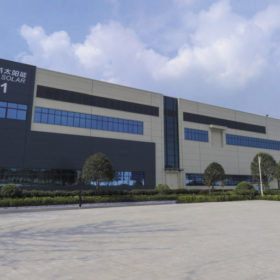
Chinese PV Industry Brief: Big polysilicon deal, new 10 GW solar cell factory
JA Solar has revealed plans to build a 10 GW cell factory in Jiangsu province, while Shuangliang Eco-Energy has agreed to buy 222,5000 metric tons (MT) of polysilicon from Tongwei.
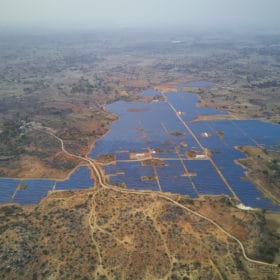
Solar module price increases to affect returns on 4.4 GW of Indian solar
Solar cell and module prices have increased by more than 40% over the last 18 months in India, driven by polysilicon prices. However, bid tariffs have remained lower than what is needed to mitigate the rise in PV module prices. The risk of lower returns is significant for 4.4 GW of projects that have been awarded over the past 18 months, with tariffs below INR 2.2 ($0.028)/kWh.

New software to identify solar-suitable surfaces
Norway’s Glint Solar has developed cloud-based software that finds suitable surfaces for solar parks. It analyzes factors such as the distance to the grid or substations, topography, soil depth, and solar radiation. The tool can also be used for preliminary project sizing.
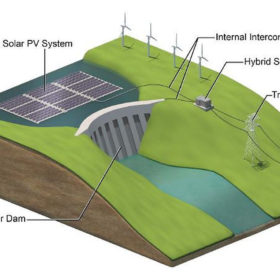
Hybridizing floating solar with hydropower
Scientists from the National Renewable Energy Laboratory (NREL) have said that the combination of floating solar with hydropower could reduce PV curtailment.
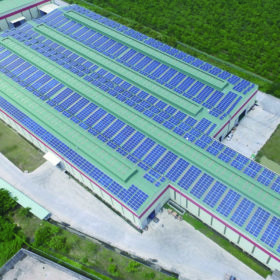
Taiwan maintains FIT rates for rooftop PV
The Taiwanese authorities have decided not to reduce feed-in tariffs for PV, as initially planned, in order to support more solar deployment. The country added around 1.9 GW of new solar capacity last year.
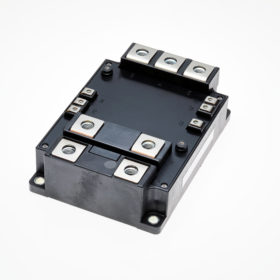
Mitsubishi Electric unveils power-switching transistor for solar
Mitsubishi Electric’s new 2.0kV LV100 semiconductor device is based on its insulated-gate bipolar transistor (IGBT) technology and Relaxed Field of Cathode (RFC) diodes. It is designed for industrial applications that need “middle-ground” power converters between DC1500 V and 3.3 kV.
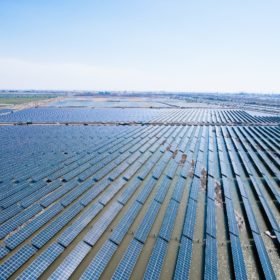
Chinese fishery hosts 70 MW solar plant with high-power modules
Concord New Energy has connected a new 70 MW solar plant to the grid in China. The project, which is situated on a pond, also supports fish and shrimp aquaculture. Trina Solar supplied 670 W solar panels for the installation.
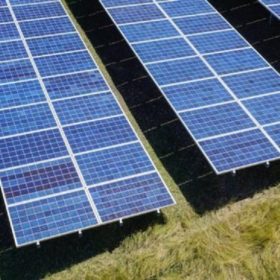
India’s first fractionally owned, ground-mount solar plant
A 5 MW open-access solar project in the Indian state of Karnataka has become the nation’s first fractionally owned, ground-mount PV plant. Bengaluru-based Pyse is financing the $3.3 million project through its investment platform.
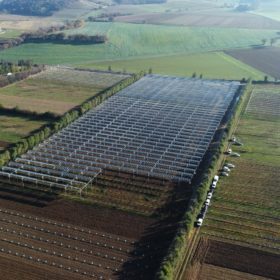
Romania introduces new rules for solar on agricultural land
Romania is set to put new solar regulations into force through the end of 2026. The rules will allow PV, wind, biomass, bioliquid, biogas, storage projects, and transformer stations to be built directly on land in several previously prohibited fertility classes.
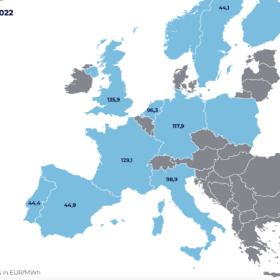
Ukraine war halting PPAs, driving up prices across Europe
Spain has already approved temporary restrictions on the price of gas for electricity generation.
