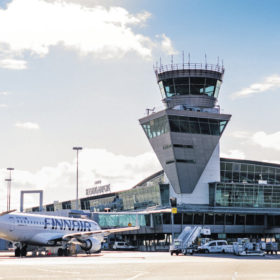
Adding solar at airports
An Indo-Malay research group has sought to define the best conditions for developing large scale solar projects at airports. The researchers provided insight on glare analysis as well as design and performance.

Hungary allocates 131.4 MW of PV in renewables auction
Solar developers secured 131.4 MW of the capacity awarded in the auction, while a biomass installation accounted for the remaining 500 kW of capacity. The national energy regulator will provide 15-year feed-in premium payments to the winning projects.

World’s biggest PV module factory
GCL System Integration plans to build a 60 GW solar module factory in China’s Anhui province, with a total investment of approximately $2.5 billion.
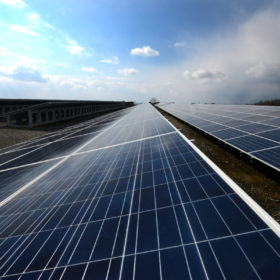
German utility-scale PV tender concludes with average price of €0.0518/kWh
The government allocated 301 MW of PV capacity across 51 projects in the procurement exercise.
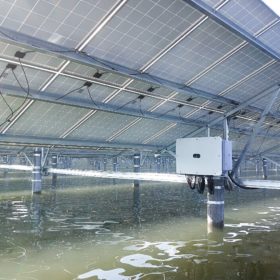
Chinese fishery hosting 260 MW of unsubsidized solar
The solar plant was built with fixed structures on a 400-hectare water surface at a fishery in Anhui province. The project was the first unsubsidized plant approved by the National Development and Reform Commission (NDRC) in 2019 and is selling power at a price of RMB 0.3844 ($0.054) per kWh.
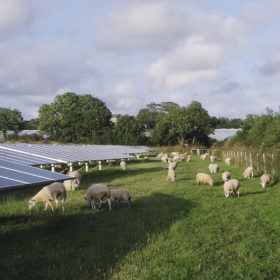
Sheep in search of a solar plant
A large sheep farming company in Germany is seeking PV asset owners who will let its animals graze sustainably at solar project sites, in a move that could be a win-win situation for everyone.

How Covid-19 is affecting the Brazilian PV sector
Brazilian consultancy Greener has conducted a survey of more than 500 solar companies in Brazil to assess the economic impact of the Covid-19 pandemic. The results show that demand has already started to slow down, and that PV system prices are on the rise.
SunPower reduces management salaries, freezes hiring and withdraws 2020 financial guidance
SunPower CEO: “We remain on track to complete our planned company split into two independently focused pure-play solar companies by the end of the second quarter.”
Covid-19 halting European PPA market – Part II
Antonio Delgado Rigal, chief executive of energy forecasting service Aleasoft, has told pv magazine all unsubsidized solar project financing will be postponed until it is possible to make reliable price predictions again. Projects could change hands in the meantime though, thanks to deep-pocketed investment funds on the lookout for bargains.

A power-to-gas system integrating co-electrolysis and methanation
Researchers in Italy extensively analyzed four different configurations of their proposed system to assess its potential, including under non-optimal, ‘off-design’ conditions and concluded that, for now, subsidies would still be required for the commercial production of synthetic natural gas.
