
MIT: Solar success chiefly due to economies of scale, public policies
Although the report issued by the U.S. scientists recognizes the importance of low-level factors, like improvements in PV components and manufacturing processes, economies of scale and public policies are said to be the high-level mechanisms responsible for most of the cost decreases in solar technology and, thus, its success over the past two decades.
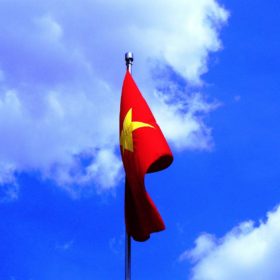
Vietnam should increase solar FIT to $0.15/kWh, report says
According to a report published by the Asian Development Bank (ADB), key factors such as the low-regulated price of electricity and uncertainty of the creditworthiness of Vietnam’s state-owned utility EVN are making it difficult to develop bankable solar and RE projects. An improved fiscal energy policy is recommended as the only way to provide the local energy sector with long-term capital and competence in conducting green credit appraisal. Furthermore, the report warns that the current 20-year FIT of US$0.0935/kWh for solar projects is too low.
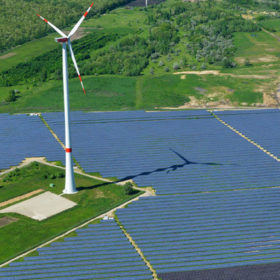
PV snaps up all capacity in Germany’s second mixed wind-solar auction
The German Federal Network Agency has selected 36 solar PV power projects with a combined capacity of 201 MW in the mixed energy auction, which ended with a final average price of €0.0527/kWh.
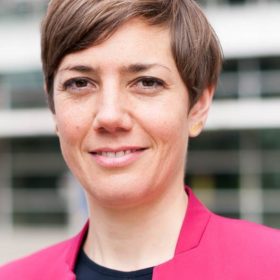
SolarPower Europe appoints new CEO
Walburga Hemetsberger has led the EU Representation Office of Austrian energy company Verbund AG for the past 10 years. At the same time, she was also a board member of Hydrogen Europe, in charge of Energy Transition Solutions.
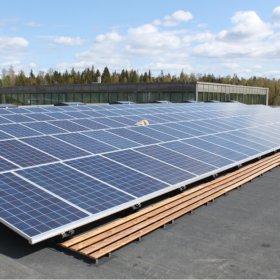
Finland launches technology neutral RE auction
The Finnish Energy Agency is seeking proposals for annual electricity production totaling 1.4 TWh. Large-scale wind, solar, biomass and wave power projects will be entitled to participate in the auction.
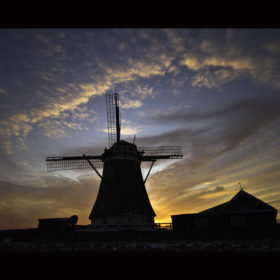
Netherlands: PV projects totaling 3.7 GW submitted for autumn round of 2018 SDE+ program
Overall, 5,907 renewable energy projects totaling 5 GW are now under review by the Dutch Ministry of Economy in the second round of the SDE+ program for this year. Solar accounts for 72.8% of the total submitted capacity.

Algeria issues 150 MW solar tender
Through the tender, the Algerian Government will select IPP solar projects with a capacity range of 10-50 MW. The projects, to be located in the southwestern part of the country, will be developed on a Build-Own-Operate (BOO) basis. Domestic content rules require the use of solar modules assembled in Algeria, as well as locally manufactured mounting structures and cables.
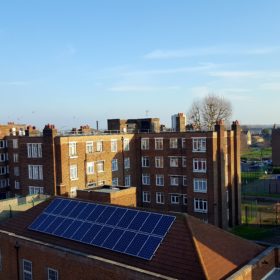
Centrica to join London blockchain trial for alternative billing
Using a blockchain-based energy trading system, the company seeks to examine ways to bill customers in the best manner for them and prosumers. In light of the potential removal of export tariffs for small scale solar in the UK, the system could provide alternative remuneration for system owners. The trial will run for six months, with the possibility of extending it to two years.
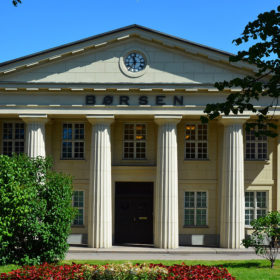
Equinor takes 9.7% stake in Scatec Solar
The Norwegian oil producer has already partnered with Scatec on large-scale PV projects in Brazil and Argentina. The transaction cost $82.4 million.
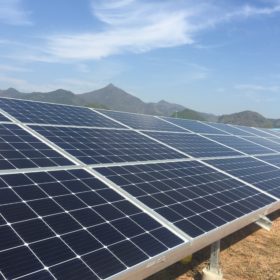
Hanwha supplying 100 MW mono PERC modules to China project
Hanwha Q Cells is continuing its collaboration with CGN Power Group. The manufacturer is delivering its Q.Peak-G5 mono-crystalline PERC solar modules to a 150 MW site in China’s Hubei province.
