Spain covers 45.8% of H1 2018 electricity demand with renewables
Spain’s electricity grid operator, Red Eléctrica de España (REE) has announced that the country’s mainland covered almost half of its electricity demand in the first half of 2018 with renewable energies alone.
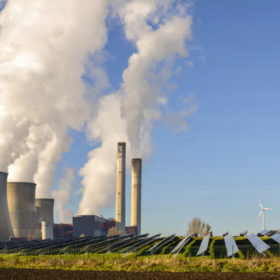
Germany: Renewables beat coal for the first time
According to numbers released by German association BDEW, in the first half of the 2018, renewables contributed 36.3% to gross electricity generation, while PV increased its share to 7.3%. Furthermore, the association said that the market-driven, phased exit from coal-fired power generation is already in full swing.
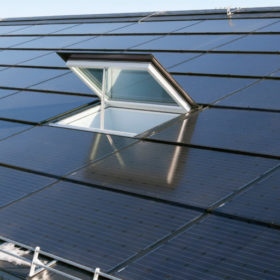
Switzerland close to hitting 2 GW solar mark
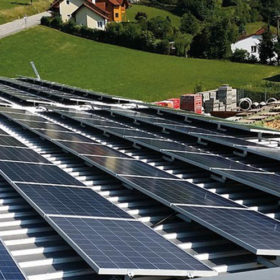
According to new numbers provided by Swissolar, Switzerland’s solar market saw a 9% drop in new PV installations in 2017. Demand for PV installations up to 30 kW, however, remained strong.
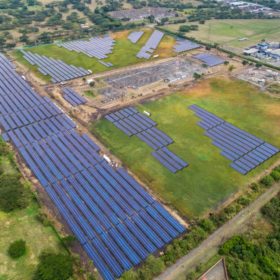
LatAm PV markets see increasing use of green bonds
Colombia’s Celsia is issuing green bonds worth US$145 million to finance its large solar PV project pipeline, while U.K.-based Faro Energy is resorting to clean energy bonds to fund its distributed generation (DG) solar projects across Brazil.

Setting the stage for solar + storage
As more states adopt ambitious renewable power and storage targets, hopes increase for continued market opportunities beyond the ITC. In the mid-term, the overall market opportunity is clear. At IHS Markit, we project 73 GW of solar PV systems will be installed in the United States from 2018 to 2022.
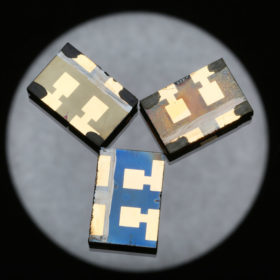
EPFL Scientists develop 25.2% efficient perovskite/silicon tandem cell
Researchers from the École Polytechnique Fédérale de Lausanne (EPFL) in Switzerland have developed a process for depositing a perovskite layer onto a silicon solar cell, which it says has already resulted in the creation of a 25.2% efficient tandem cell.
Swiss scientists develop machine learning algorithm to optimize home solar-plus-storage
The research team used real-world energy consumption data from 4,190 Swiss households to analyze how different cost scenarios may influence optimal photovoltaic-battery (PVB) system deployment.

Chad unveils plans for giant solar park
The project, the capacity of which could range between 200-400 MW, is being planned by Dubai-based Almaden Emirates Fortune Power LLC, a joint venture of holding investment company, Emirates Fortune Group and Chinese solar manufacturer, Almaden. If built, the facility will more than double the country’s current power generation capacity, and help reduce energy poverty.

Italy’s Fimer enters string inverter business, plans stock exchange listing
In an interview with pv magazine, managing director of the Italian central inverter specialist, Filippo Carzaniga discusses the company’s new strategy, explains the reasons for the listing. After delivering 1.5 GW of inverters in 2017, Fimer hopes to increase its shipment volume by around 10% this year, to between 1.6 GW and 1.7 GW.

Brazil’s Petrobras enters solar energy business
The Brazilian oil giant has signed a memorandum of understanding with its French strategic ally, Total and its subsidiary, Total Eren to invest in solar and on-shore wind projects in Brazil.
