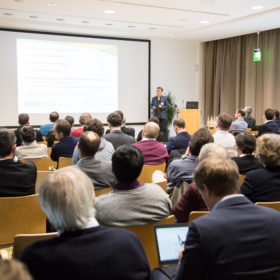
Manufacturing innovations on show at European Solar Technology Forum
This week, pv magazine attended the European Solar Technology Forum, where researchers unveiled new innovations from across the manufacturing spectrum, prompting plenty of discussion over how the future will look for solar in terms of the technology available and its applications. Bold claims of the potential for a further 20% cost reduction in manufacturing were made.

Request pushes back deadline for US solar tariff decision
The final deadline for President Trump to impose tariffs, quotas or other sanctions on solar imports will now be January 26, following a request by the U.S. Trade Representative for more information.
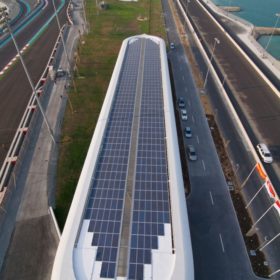
UAE: Rooftop specialist Environmena acquired by UK investment firm
U.K. investment firm, Arjun Infrastructure Partners is expected to bring strategic support and access to capital to the UAE-based solar developer.
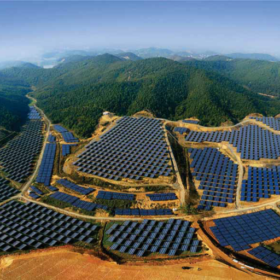
Solar PV 2018: Installs of 111 GW, a polysilicon factory boom and $0.30/W for modules
On the back of high solar PV installs, which will smash records this year at just under 100 GW, BNEF’s optimistic demand forecasts place growth at 111 GW in 2018, rising to 121 GW in 2019. It further sees a polysilicon factory boom, with production 10% up on 2017; and module prices dropping to as low as US$0.30/W for market leaders.

Argentina grants final approval for new distributed generation law
Under the new rules, which are expected to come into force in the first quarter of 2018, owners of residential and commercial PV systems will be allowed to sell excess power to the grid under a net metering mechanism.
Lithuania’s new energy strategy bets on wind and prosumers
Although the country’s new national energy independence strategy says wind will represent 65% of its total renewable energy share by 2050, the number of households that self-generate their power (predominantly from solar) is expected to increase from 34,000 in 2020, to 500,000 in 2030.
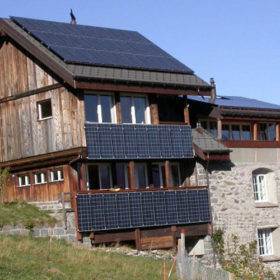
Switzerland’s solar power production could reach 19 TWh by 2050
A report from the Paul Scherrer Institute forecasts a bright future for PV technology in the Alpine country. Solar may even be able to grow by 18 TWh over the next 30 years from just 1 TWh currently.
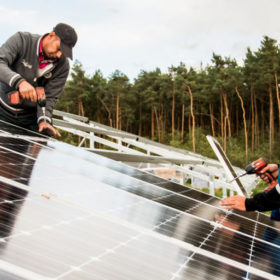
Germany adds 150 MW of solar in October
In the first ten months of 2017, new PV additions totaled 1,465 MW, which is almost the same amount of installed solar capacity installed in the same period of last year.
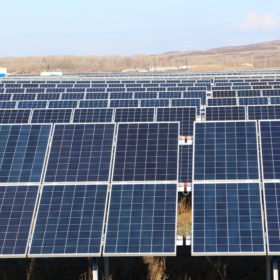
Fortum to buy 35 MW of solar plants in Russia
The Finnish power utility has agreed to acquire three solar facilities, commissioned between 2016 and 2017 and located in Russia, from local solar module maker Hevel.
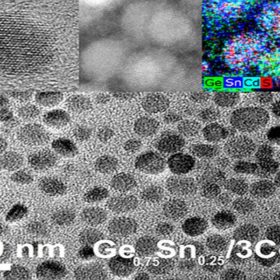
Tin makes nanoparticles better at absorbing sun’s rays, researchers find
Addition of tin in germanium nanoparticles helps to improve their photoluminescence thanks to better matching of lattice structures that boost structural characteristics, aiding light absorption, says Ames Laboratory in U.S.
