
Multiple designs of photovoltaic-thermal collectors
Scientists have modeled eight different kinds of PVT systems, some with a glass covers and some without. They found the worst efficiency was achieved in uncovered systems with parallel round tubes.

Nanoparticles, phase-change materials in PVT systems
Scientists have used varying levels of Al₂O₃ and ZnO paraffin wax to improve the electrical and thermal performance of a photovoltaic-thermal (PVT) system. They have also developed a prediction model for this specific combination of hybrid nano-phase change materials.
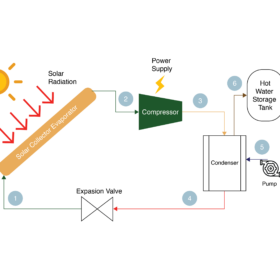
Direct expansion solar heat pumps for residential applications
Scientists in India have conducted an extensive review of all direct expansion solar heat pump technology in an effort to broaden its residential adoption. Such system can psroduce hot water from 15 C to 60 C at an average coefficient of performance of 1.5 to 4.5.
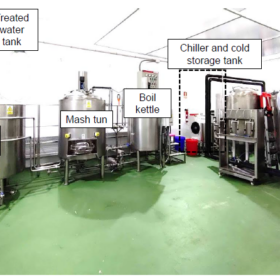
Solar for small-scale brewing
Researchers in Spain have investigated the potential of using photovoltaic (PV) or photovoltaic-thermal (PVT) systems in microbreweries and have found that PVT systems can cover more energy demand but have a longer payback time.
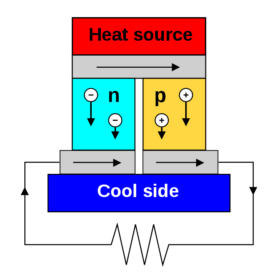
Hybridizing thermoelectric generators with photovoltaic ground-source heat pumps
Researchers in South Korea have analyzed the feasibility of using thermoelectric generators in combination with residential solar-assisted ground-source heat pumps and have found that the thermoelectric devices may act as a suitable power source for data loggers and other sensors in a building system.

New design for photovoltaic-thermal panels mitigates risk of cracking
Researchers in Sweden have developed a new PVT module using an aluminum alloy structure between the thermal absorber and the photovoltac cells. This architecture reportedly reduces thermal expansion by 20%, thus increasing the chances of mitigating cracks in the PV unit.
Hybridizing PVT energy with heat pumps, borehole storage
A European research group has tested an energy system combining PVT collectors, a water-to-water heat pump and borehole thermal energy storage in an Italian swine farm and has found the proposed system can completely replace fossil fuel-based power generation.
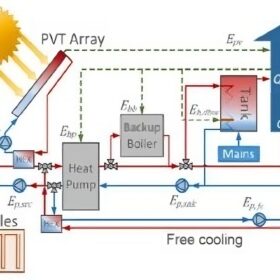
Hybridizing residential ground source heat pumps with PVT, free cooling
Researchers in Sweden sought to raise the efficiency of ground source heat pumps by combining their operation with that of PVT systems and free cooling. Through a series of simulations, they found that this integrated solution may reduce borehole length and land area requirements.
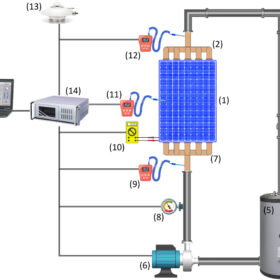
Using waste heat from PV panels to generate residential hot water
Scientists in the United States has developed a new photovoltaic-thermal system design that utilizes parallel water pipes as a cooling system to reduce the operating temperature of photovoltaic panels. The waste heat generated by this process is then used to generate domestic hot water.
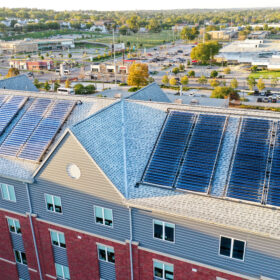
U.S. university deploys high density solar thermal system
US-based Creighton University has equipped a new student residence with solar heat collectors generating an annual peak capacity of 69.9 kW thermal energy. The VirtuHOT HD system, conceived for rooftop applications, includes an absorber plate, a borosilicate glass tube, and an integrated mounting system.
