
Decision making tool for crop selection in agrivoltaics
Researches in Germany have created a comprehensive crop selection tool for agrivoltaics across more than 25 countries. The proposed matrix evaluates species-specific responses of 12 major crop types to shading, microclimate changes, and crop growth, while also assessing their water needs, shade tolerance, and space requirements.
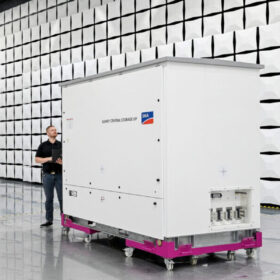
SMA secures German certificate for grid-forming battery inverter
SMA Solar Technology AG has obtained the first German unit certificate for a grid-forming battery inverter with instantaneous reserve. The certification allows use in high- and extra-high-voltage projects ahead of the new reserve market in 2026.
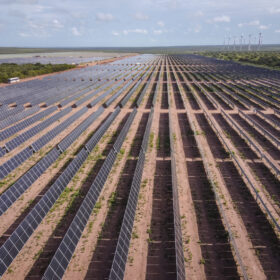
Brazil PV curtailment hits 14% as Voltalia seeks compensation deal
Voltalia has reported a 14% cut in its Brazilian PV output in the first half of 2025. The company expects curtailment to stay near 12% to 15% until 2027 and ease from 2028.
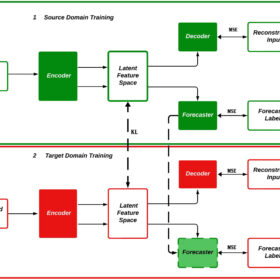
Domain adaptation framework for PV power forecasting
A team of researchers have developed a domain adaption framework capable of transferring knowledge from solar power plants with abundant data to plants that need to be trained without labelled data. The framework has been tested at three solar power sites in Germany and was found to perform better than reference models.

Italy issues new fire safety rules for PV and storage systems
Italy’s fire service has introduced binding guidelines for PV systems up to 1,500 V, adding rules on storage, spacing, compartmentalization, and maintenance.

Tesla unveils new generation of utility-scale batteries
Tesla’s long-anticipated innovation in utility-scale battery storage has yielded two new products, marking a leap toward faster deployment, greater scalability, and higher energy density.
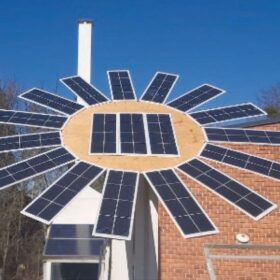
Photovoltaic trees can save forest cover
Research simulating a solar tree farm within a coastal forest in South Korea found that solar tree structures could preserve 99% of forest cover when compared to a fixed solar farm built in the same area, without sacrificing power output.

Saharan dust events can reduce PV power output in Mediterranean area by up to 50%
New research from Hungary shows that Sarahan dust events can reduce PV power output in five Mediterranean countries by an average of 25-40%. The scientists stressed the need for including real-time dust monitoring and cloud interactions in solar forecasting.
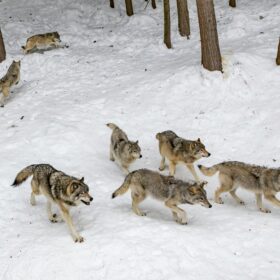
Novel MPPT methodology uses grey wolf hunting as inspiration
Researchers have developed a maximum power point tracking algorithm based on the social hierarchy and hunting strategy of grey wolves. When tested under realistic shading conditions, the grey wolf optimizer achieved an average MPPT efficiency of 98.15%, significantly outperforming conventional MPPT methods.

Bluetti debuts world’s first sodium-ion portable power station
The Pioneer Na will be available globally from mid-October, 2025.
