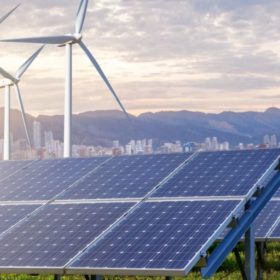
RE generation capacity topped 2,179 GW in 2017 – IRENA
According to the latest statistics from the International Renewable Energy Agency (IRENA), global renewable energy (RE) generation capacity hit 2,179 GW last year. Leading the charge were renewable hydro, onshore wind and solar PV.
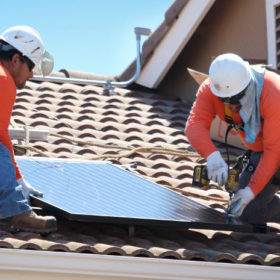
Sunlight Financial raises $225M for residential solar loans
The US residential solar finance provider sees the capital covering approximately 9,000 solar loans at $25,000 each.
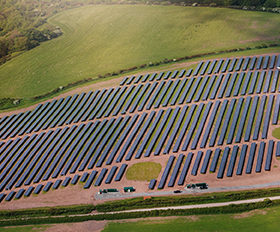
Vattenfall resorts to crowdfunding for its Dutch PV projects
Nuon, the Dutch subsidiary of Swedish energy giant, Vattenfall, is offering bonds to its customers, as well as to customers of other power providers, in order to raise additional funds for the financing of its solar project pipeline in the Netherlands.
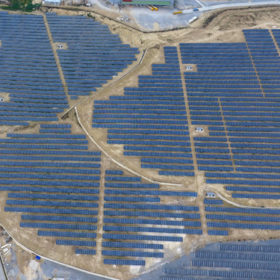
Turkey registers another 648 MW of unlicensed PV capacity in March
Since the beginning of 2018, newly registered unlicensed solar up to 1 MW has reached over 1.1 GW, while total cumulative capacity has topped 4.59 GW.

Netherlands’ Energyra starts construction on 100 MW module factory
The Dutch solar PV panel maker has received financial support from the government of region of North Holland, where the manufacturing facility will be located. The first module shipments are planned for the end of 2018.
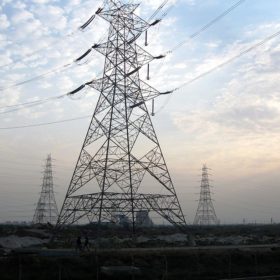
IEA leads governments off the Paris Agreement track, report states
In a new report out today, Oil Change International and the Institute for Energy Economics and Financial Analysis (IEEFA) have taken the International Energy Agency (IEA) to task for misleading governments on climate policy through its energy forecasts.

Brazil allocates 806 MW of solar in A-4 auction, final average price drops to $35.2/MWh
Around 20 GW of solar PV projects were initially competing in the contest. PV was again the source with the largest share, accounting for around 80% of total assigned capacity. The final average price for solar was 118 BRL (US$35.2)/MWh.

Guinea Bissau plans its first big solar-plus-storage project
A solar power plant with a capacity of between 20 and 30 MW is currently being planned with the support of the World Bank, which is now seeking consultants to carry out a feasibility study for the project.
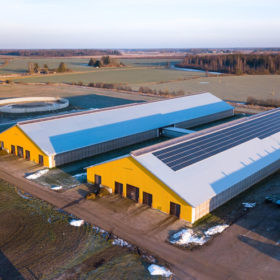
Estonian utility Eesti Energia sees solar business increase
The Estonian state-owned power utility announced its plans to enter the solar energy business in September. The company has now commissioned a 200 kW rooftop solar power generator, which will sell power to a local farmer under a 25-year PPA.
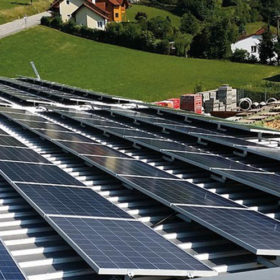
Austria plans to launch 100,000 solar roof program
The Austrian solar sector has welcomed the new draft plan for an integrated climate and energy strategy and, in particular, the planned “100,000 roofs program”. Greenpeace, however, believes a reorientation of climate policy is urgently needed and that the presented measures are inadequate to reach the Paris climate targets.
