
New control strategy for grid-forming inverters
Researchers in the United States have created a droop control strategy for grid-forming inverters that purportedly improves power system frequency stability. By using an exponential active power–frequency relationship, the novel technique optimizes the use of available headroom, reduces frequency deviations, and enhances overall grid resilience.
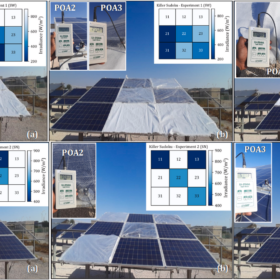
Using Asterisk Sudoku for PV system reconfiguration under shading conditions
Researchers in Qatar have used an algorithm relying on a variant of the popular logic-based puzzle to determine the optimal way to eliminate cluster shading. They have tested the new approach under fixed and moving shadows.

KAUST achieves 28.7% efficiency in perovskite-perovskite-silicon tandem solar cell
An international team of researchers led by King Abdullah University of Science and Technology has fabricated a triple junction perovskite-perovskite-silicon tandem solar cell that achieved a world record efficiency for this cell architecture. The device incorporates stabilized perovskites that ensure improved performance and stability.

Cypriot startup unveils new device to reduce solar curtailment
Cyprus-based Enerthon has developed a smart zero-export control device that prevents PV export losses from curtailment by directing generation to self-consumption. Certification is expected soon.
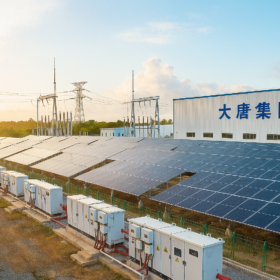
China’s Datang launches testing facility for PV with 2,000 V system voltage
China Datang Corp. says its 2,000 V solar testing base in China’s Hainan province will validate high-voltage modules under tropical coastal conditions.
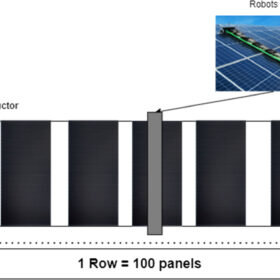
New model to optimize desert PV plant cleaning schedule
Scientists have used a CPLEX-based MIP model and tested it on a section of the 10 MW Masdar City Solar Photovoltaic Plant. In their simulation, they assume the use of two robotic cleaners to operate over a 90-day horizon. Total cleaning costs were estimated at $7,987.

Scientists report experimental breach of Shockley-Queisser efficiency limit for silicon solar cell
A Chinese-US research group claims to have achieved a power conversion efficiency of over 50% in an n-type single-junction solar cell by inhibiting light conversion to heat at extremely low temperatures. The result was achieved at temperatures of 30-50 Kelvin, which are a few tens of degrees above absolute zero.
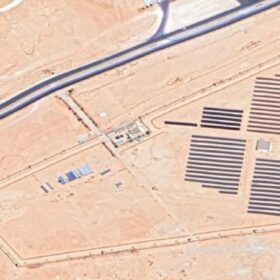
One-year testing shows ground-mounted PV achieves ‘superior’ performance ratio in Sahara
A 12-month testing of a 1.1 MW pilot PV facility built in 2016 in Algeria’s desert has shown that tracking-equipped ground-mounted PV can reach high performance ratio values under Saharan conditions. The plant was built with a variety of PV module technologies.
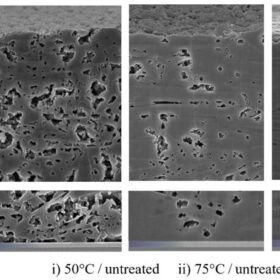
Perovskite solar cells with laminated carbon electrodes reach 20.4% efficiency
Scientists in Germany report a method to boost performance of perovskite solar cells made with laminated carbon electrodes that are compatible with typical hole transport layers.
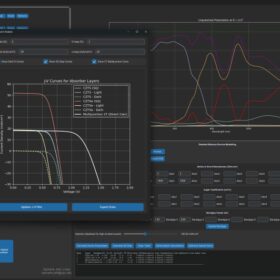
New open-access simulation software for solar cell modeling
Developed by a professor at the Polytechnic University of Catalonia, the Soley software is claimed to enable precise optoelectronic modeling of photovoltaic devices and accurately reproduce the behavior of photodiodes under illumination.
