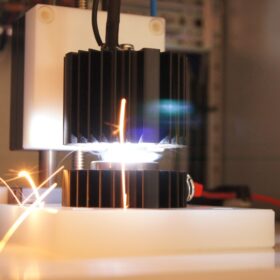
Fraunhofer ISE proposes new standard for inverters with arc fault detectors
The Fraunhofer Institute for Solar Energy Systems (ISE) has replaced the 2011 UL 1699B standard with its new IEC 63027 standard for inverters, incorporating arc fault detectors. The objective is to improve safety and efficiency in inverter technology.
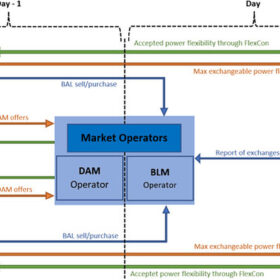
New contract aids renewable producers in meeting retail demand for flexibility
Swedish scientists have created a contract to help renewable energy producers and retailers to pay high imbalance costs. The new framework could boost clean energy profits by up to 4.8% and retail profits by more than 7%, claim the researchers.
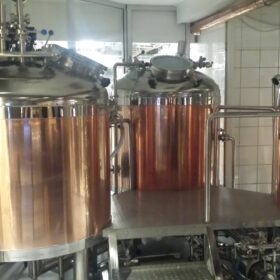
Solar for microbreweries
Spanish researchers have studied the potential of rooftop PV in microbreweries and have found that solar could cut the cost of heating and refrigeration by nearly 30%. They say that coupling PV with small breweries could result in payback times ranging from 4.3 to 6.6 years.
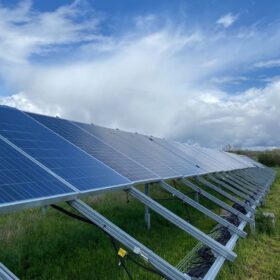
Fraunhofer ISE opens new outdoor solar technology test field in Germany
The new test field includes laboratory and field measurements, allowing PV modules to be evaluated faster and more accurately by combining and comparing indoor laboratory measurement results with those from the test field. The new location complements existing Fraunhofer ISE testing sites on Gran Canaria and in the Negev desert in Israel.

Storing renewables with compressed CO2, combined heating and power unit
A Chinese research group has combined compressed CO2 with combined heating and power (CHP) units for renewable energy storage. The system has achieved a total energy efficiency of 35.96% and an energy storage density of 1.54 kWh/m3.
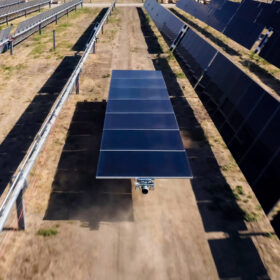
Utility-scale solar installation goes automated
Powered by installation robots, on-site assembly line and digital twin software, the Terabase automated power plant construction system aims to boost productivity and cut construction costs.
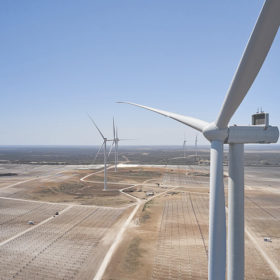
Tools to monitor PV hybrid system performance
Owners and operators of PV hybrid systems need to monitor and control system operation and performance, which generally involves the collection of big data sets. Data visualization techniques can simplify the monitoring and allow issues to be quickly recognized, says IEA-PVPS.
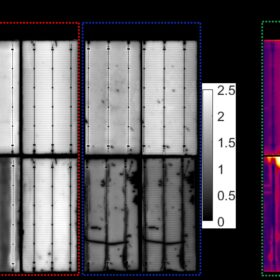
Scientists warn of heat-induced failure risks in HJT glass-backsheet PV modules
University of New South Wales researchers have identified four failure modes caused by damp heat in heterojunction solar panels with a glass-back sheet configuration. The failures could result in power losses ranging from 5% to 50%.
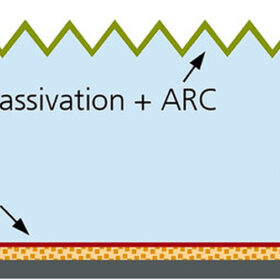
Epitaxially grown p-type wafers with TOPCon rear emitter solar cells
Scientists from Fraunhofer ISE have sought to utilize epitaxially grown p-type silicon wafers TOPCon rear emitter (TOPCore) solar cells with the aim of reducing production costs and carbon footprint. They claim this combination is paving the way for TOPCore devices that exceed 25% efficiency.
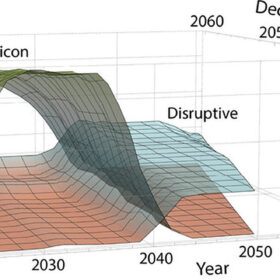
The world can manufacture enough solar to reach decarbonization goals
NREL researchers model viable pathways to supplying the estimated 60 TW of capacity required for decarbonization, and study the effect that disruptive solar technologies may have on deployment cost and market opportunity.
