
India has installed more than 49.3GW of solar
The nation reached a cumulative 151GW of renewable energy generation capacity – including large hydro – by December 31, although a large volume of off-grid equipment is not included in that figure.
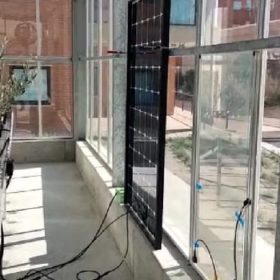
Modeling method for agrivoltaics in greenhouses
Spanish researchers have developed a new modeling technique to assess the performance of semi-transparent PV systems for greenhouses. Their novel approach considers the broadband and spectral content of the irradiance, the solar cell technology and its performance metrics, and the relationship between the photosynthetic rate and the effective photon flux that falls on the crops.
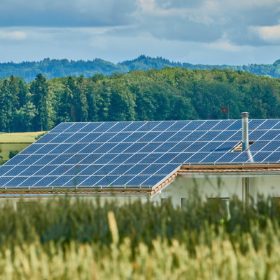
Romania authorizes bilateral PPAs, raises size limit for solar under net metering to 400kW
With Emergency Ordinance no. 143/2021, the Romanian government has restored legal certainty for bilateral power purchase agreements and has created more favorable conditions for solar power generators under net metering regime.
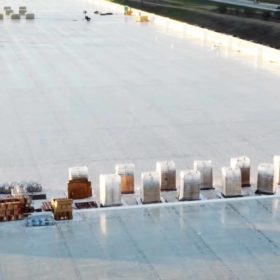
Work underway on Tesla’s rooftop solar system in Texas
A drone pilot has discovered that Tesla is starting to install solar panels, racking and inverters on the rooftop of a manufacturing facility it is building in Texas.
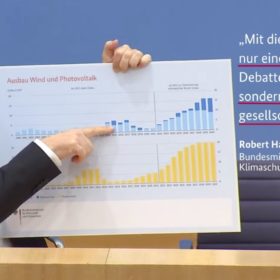
New German government presents package of measures to support PV
The new package includes an increase in solar capacity, to be allocated through tenders, and the mandatory installation of PV systems in all commercial buildings.
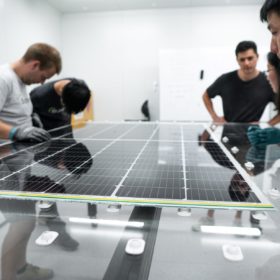
‘Ultra low-cost solar’ gets AUD 40 million R&D boost from ARENA
The Australian Renewable Energy Agency has announced AUD 40 million ($28.7 million) of research and development funding across two streams. Stream 1 consists of cells and modules, while Stream 2 is focused on balance of system, along with operations and maintenance. It is hoped the additional funding will spur Australia’s pioneering solar research to push for the federal government’s “ultra low-cost solar” target of AUD 15/MWh.
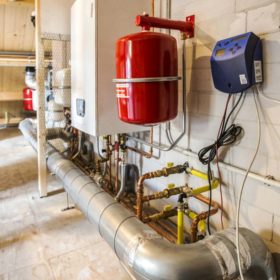
Residential building fully reliant on hydrogen for space heating, hot water
The campus of the Delft University of Technology (TU Delft) in the Netherlands is currently hosting a retrofitted existing building provided with heating by an H2 heating boiler in the attic. The boiler is linked to an underground hydrogen system.

India may add 12.5GW of solar in 2022-23
Indian ratings agency ICRA expects the solar boost based on the backlog of PV projects awarded by central and state electric utilities.

Brazil introduces new rules for distributed generation, net metering
The Brazilian authorities have introduced new rules to ensure that PV systems below 5 MW in size will still be eligible for net metering tariffs until 2045. A grid fee for prosumers will go into effect from 2023, but the economic profitability of rooftop PV and small solar parks is expected to remain high.

South Korea installed 4.4 GW of PV capacity in 2021
South Korea’s cumulative installed PV capacity hit 22 GW at the end of 2021, according to provisional figures from the Korea Energy Agency.
